
Brand Management for $1M to $10M Brands: What Changes as You Grow
A $1M brand and a $10M brand need different things from a brand manager. This page breaks down what the job looks like at $1M, $5M and $10M, which plan fits each stage, and the point where hiring your own person makes more sense.
Short answer
At $1M a brand manager mostly fixes listings, keeps stock and ads from breaking, and builds the reporting habit. At $5M the job shifts to catalog planning, ad structure across many ASINs, launches and a second channel. At $10M it becomes coordination of specialists, forecasting and protection. In our experience that maps to roughly 10, 20 and 40 hours a month.
What Changes Between $1M and $10M
Crossing $1 million is no longer rare. Amazon's 2025 Small Business Empowerment Report says more than 75,000 independent sellers passed $1 million in sales in its store in 2025, a 36% jump from 2024, while US independent sellers averaged a little over $375,000 a year. So a $1M brand is ahead of the typical seller, but it is one of tens of thousands at that level. The work that got you there usually will not get you to $10M.
What changes is not one thing. It is the number of products, the size of the ad budget, the number of channels, the number of people and vendors involved, and how much a single mistake costs. A suppressed listing on a $1M brand with three hero ASINs is a bad week. In our experience, a stock-out on a $10M brand's top seller in November can cost more than a year of management fees.
An Amazon brand manager is the person accountable for the whole channel: listings, content, ads direction, pricing, inventory timing, reviews, account health and Brand Registry tools. That job stays the same as you grow. What a brand manager spends the hours on is what changes.
At $1M: Fix the Foundation and Stop the Leaks
Most brands around $1M got there on one or two products that work. The founder often still writes the listings, runs the ads and places the purchase orders. The risk at this stage is that growth hides waste: ad campaigns nobody has restructured in a year, listings written before anyone looked at search data, and reorders placed by gut.
At this stage a brand manager should own these things, in roughly this order.
Account health and policy notices
Someone reads every notice the day it arrives. Amazon's performance targets ask for an order defect rate under 1%, and for seller-fulfilled orders a cancel rate under 2.5% and late shipment rate under 4%. At $1M one deactivated hero ASIN can be a third of revenue.
Hero listings rebuilt from data
Titles, bullets, images and A+ Content on the top sellers reworked from Brand Analytics search query data, one ASIN at a time so results can be read. Our Amazon brand health audit is a good place to find the first fixes.
Ads cleaned up against margin
Amazon's own ACOS guide says ACOS (ad spend divided by ad sales) has to stay below your profit margin to make money. At $1M the win is usually cutting spend that never converts and moving proven search terms into exact-match campaigns.
A written reorder plan
Lead time, weekly sales and a reorder date per SKU, written down. Our rule of thumb: place the reorder while the stock you have left still covers the full lead time plus a few weeks of safety stock.
One monthly report
Sales, sessions, conversion, ad spend, TACoS (ad spend divided by total sales) and stock, the same way every month. Our page on Amazon brand manager KPIs lists what belongs in it.
At $5M: Run the Catalog Like a Portfolio
Around $5M the brand usually has more products than one person can keep in their head. Launches happen every quarter, ad spend is large enough that small structure mistakes cost real money, and there is often a second channel pulling on the same inventory. The founder is now managing people, not listings.
The brand manager's job moves from fixing things to deciding where the next dollar and the next hour go.
Catalog tiers
Sort ASINs into heroes, steady sellers and tail. Heroes get content tests and the ad budget; the tail gets kept healthy or cut. Variation themes need a review too: Amazon began limiting review sharing between variations with significant functional differences on February 12, 2026, rolling out by category through May 31, 2026.
Ad structure across many ASINs
Separate campaigns by product tier and intent, with a break-even ACOS per product, not one target for the account. Larger accounts often justify dedicated PPC management under the brand manager's direction.
A launch calendar
Each launch needs listing, images, Vine, coupons and launch ads lined up before stock lands.
Content testing as a habit
Manage Your Experiments lets Brand Registry brands A/B test titles, images, bullets and A+ Content. In our view, at this size one test should always be running on a hero ASIN.
A second channel without double counting
Shopify or TikTok Shop often comes in here. Amazon's Multichannel Fulfillment lets you ship orders from other channels out of the same FBA inventory, which makes allocation a weekly decision. See our multichannel brand management guide.
At $10M: Coordinate, Forecast and Protect
By $10M the brand has a team, even if part of it is outside the company. There may be an ops person, a PPC specialist, a designer, a 3PL and a manufacturer with a long lead time. The brand manager is now the person who keeps all of them pointed at the same numbers.
The work at this stage is less about any one listing and more about the system.
Forecasting and FBA capacity
Amazon's FBA page says items stored more than 181 days draw a monthly aged inventory surcharge, and that going over your restock limit can raise storage costs. With long manufacturer lead times, over-ordering and under-ordering both get expensive. Planning stock is now a monthly meeting, not a reorder.
Brand protection
Bigger brands attract counterfeiters and listing abuse. Brand Registry's protection tools, such as Report a Violation, Project Zero and Transparency, need someone who checks them on a schedule. Each tool has its own eligibility rules in Brand Registry.
Full-funnel ads and measurement
Sponsored Brands, Sponsored Display, video and off-Amazon traffic all need to be judged on total sales. Off-Amazon traffic needs its own tracking so it gets credit. Amazon DSP, its programmatic display buying, is usually the last piece added.
Specialists, managed
At this size it often makes sense to buy specialist work, such as PPC or creative, and have the brand manager set priorities and check results. One accountable owner keeps vendors from each optimizing their own number.
New markets
Expansion to Canada, the UK or the EU is common at this stage. Each new store adds listings, compliance and stock to manage.
Typical Plan Fit by Revenue (Our Judgment)
Revenue alone does not set the hours. SKU count, number of channels, ad spend, how much is broken and how much the founder still does matter more. Use the table as a starting point, not a rule.
How Evolve helps. Our Amazon brand management plans are hour-based, paid upfront monthly, month to month, and hours do not roll over. Our prices, as of October 2026: Brand Support, 5 hours for $750 a month ($150 an hour); Brand Manager, 10 hours for $1,250 ($125 an hour); Brand Manager Plus, 20 hours for $2,000 ($100 an hour); and Full Brand Management, 40 hours for $3,600 ($90 an hour). Work beyond a plan is $150 an hour. Ad spend and fixed-price production are billed separately, such as product photography from $295, product video from $395 and a Brand Store at $1,495. PPC management is $995 a month up to $10,000 in ad spend, or $1,995 up to $50,000, with a $1,000 monthly ad spend minimum. Every price is on our pricing page.
For context, other agencies publish ranges by revenue. My Amazon Guy, which prices by quote, published a guide on July 16, 2026 putting full-service management at $3,500 to $6,000 a month for $500K to $2M brands and $6,000 to $12,000 for $2M to $10M brands, and says percent-of-revenue deals run 3% to 8% of Amazon sales. SupplyKick, also quote only, says in a guide updated September 14, 2026 that its mid tier runs $2,000 to $3,500 a month for $500K to $2M brands and its premium tier $4,000 to $7,500 or more for $2M and up. Our Amazon brand management cost guide compares more published prices.
How to Scale Brand Management as Revenue Grows
Moving up a stage goes better when the management grows on purpose instead of in a panic. This is the order we use.
Write down who owns what today
List every recurring task: account health, listings, ads, content, reorders, reviews, reporting, launches. Next to each, write the person or vendor who owns it. Blanks and duplicates are your first problems.
Run a full audit before adding hours
Score the account so you know whether you are buying cleanup or upkeep. Cleanup is a one-time burst; upkeep is the monthly plan. Start with our free Amazon listing audit.
Set the numbers you will judge by
Total sales, TACoS, conversion by ASIN, in-stock rate on heroes and contribution margin. Agree on them before work starts so nobody picks a flattering number later.
Pick the smallest plan that covers upkeep
Size the plan to the steady monthly work, then buy the cleanup as extra hours or fixed-price projects. Hours that sit unused are wasted, since they do not roll over.
Split specialist work out when it gets big
When ad spend or creative volume outgrows the plan, buy that piece separately and keep the brand manager as the owner of priorities. Our brand manager vs full-service agency page compares the two setups.
Review the setup every two quarters
Look at hours used, what moved and what is still slipping. Step up a plan when the priority list keeps growing; step down when the account is stable.
Plan the in-house handoff early
If you expect to hire, document processes and keep logins, reports and SOPs in your own accounts so a new hire starts with a working system.
Do It Yourself, Hire Out, or Hire In-House
Do it yourself if you are near $1M with a small catalog, one channel and a founder or operator who will protect two to four hours a week for the recurring checks. Our Amazon brand management checklist lays them out week by week. Hiring anyone before the basics are written down tends to waste money.
Hire outside help when the checklist keeps slipping, when the work spans skills nobody on the team has, or when the founder's hours are worth more on product and sales. An outside brand manager is also the cheaper way to get senior judgment for 10 to 40 hours a month.
Hire in-house when the need is steady and large. PayScale puts the average US brand manager base salary at $88,911 as of September 14, 2026. The Bureau of Labor Statistics says benefits were 30.0% of private employer compensation cost in June 2026, so wages are about 70%. Dividing $88,911 by 0.70 gives about $127,016 a year, or about $10,585 a month, before recruiting, tools and management time. That buys our 40-hour plan plus about 47 extra hours at $150, about 87 hours in all, or about 118 hours if every hour cost $90. Our view: once you steadily need more than about 100 hours a month of brand-level work, an in-house hire usually wins on cost, and it also gives you someone in the building every day.
Signs you are ready to hire in-house
Revenue near or above $10M, more than one channel, daily decisions that cannot wait for a weekly call, and enough work to fill a full-time week for a year. Our brand manager vs in-house hire page runs the full math.
Signs you are not
The work comes in bursts, nobody on the team could manage or judge a brand manager yet, or the role would really be three jobs (ads, creative, ops) in one person.
A middle path
Hire an operator in-house and keep an outside brand manager for strategy, ads direction and content.
Evolve was founded in 2017 by Ian Smith, who has sold on Amazon since 2015. We are a husband-and-wife team in Colorado backed by AI agents, and we make the photos and video in house. If you want a straight answer on which stage you are in and what it needs, email Ian at [email protected], call or text 719-257-3557, or book a free 30-minute call. If hiring in-house is the better move, we will say so.
Where These Facts Come From
About Amazon: A record number of independent sellers surpassed $1 million in sales in 2025
aboutamazon.com · Open source →
Amazon: Monitor your account health, performance targets (help document PDF)
m.media-amazon.com · Open source →
Amazon Ads: What is ACOS
advertising.amazon.com · Open source →
Amazon Seller Forums: Changes to review sharing across product variations starting Feb 12 (Jan 7, 2026)
sellercentral.amazon.com · Open source →
Amazon Selling Partner Blog: Grow your revenue streams with Multichannel Fulfillment (Sep 18, 2025)
sell.amazon.com · Open source →
Amazon: Fulfillment by Amazon
sell.amazon.com · Open source →
My Amazon Guy: Amazon account management cost for brands (Jul 16, 2026)
myamazonguy.com · Open source →
SupplyKick: Amazon account management services (updated Sep 14, 2026)
supplykick.com · Open source →
PayScale: Brand Manager salary in the US
payscale.com · Open source →
BLS: Employer Costs for Employee Compensation, June 2026
bls.gov · Open source →
About the Author
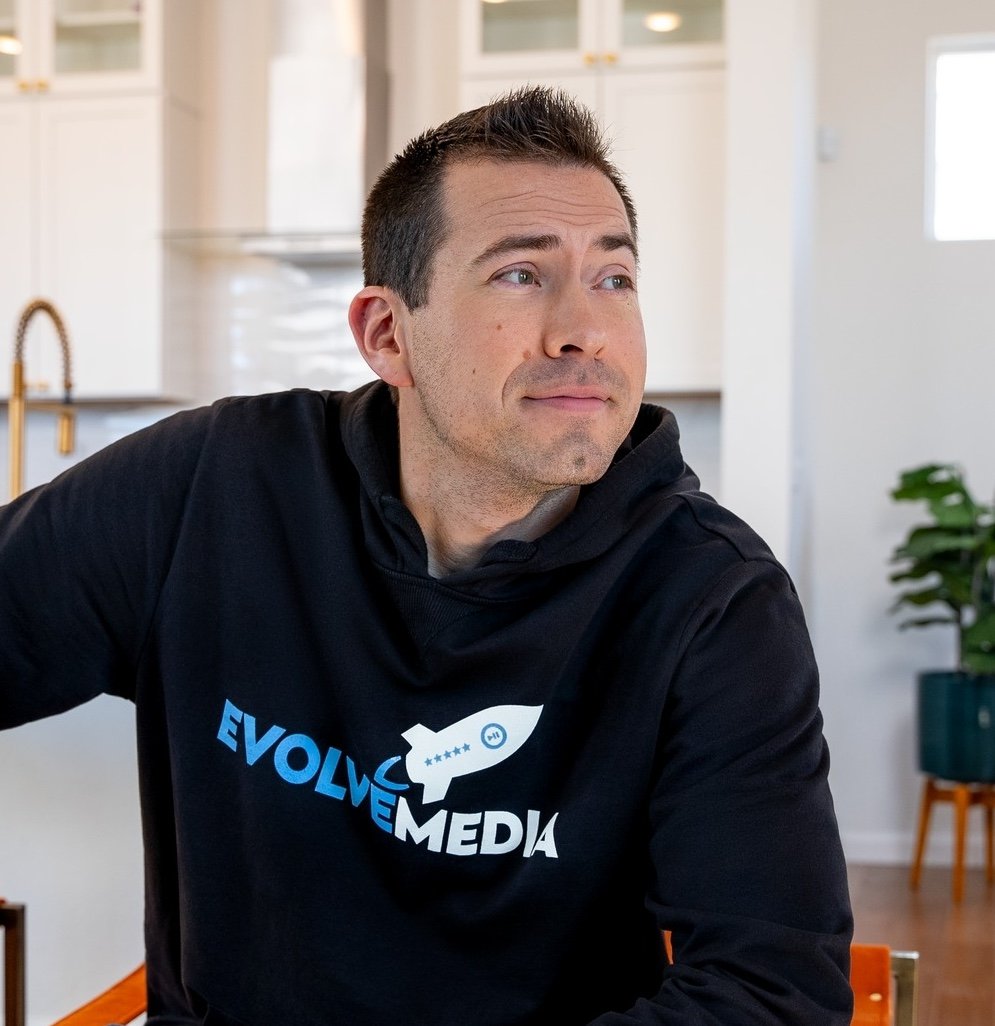
Ian Smith
Founder, Evolve Media Agency
Ian has run Evolve Media Agency since 2017 and has sold on Amazon since 2015. He and Megan run brand management, launches, PPC and in-house photo and video for Amazon, Shopify and TikTok Shop brands, including supplement brands, from Colorado. Questions about this page go straight to him at [email protected].
Common Questions
What does a brand manager do for a $1M Amazon brand?
How many hours of brand management does a $5M brand need?
When should a brand hire an in-house Amazon brand manager?
What do agencies charge to manage a $1M to $10M Amazon brand?
Is percent-of-sales pricing a good fit for a growing brand?
What changes most between $1M and $10M?
Which Evolve plan fits a brand doing $1M to $10M?
Not Sure Which Stage You Are In?
Book a free 30-minute call. Bring your revenue, SKU count and ad spend, and we will tell you what a brand manager should own right now and how many hours it takes.
Rather email? Write Ian at [email protected]. Call or text 719-257-3557. Watch our YouTube channel, grab the free Ecom Profit Box guides, or join the newsletter.
Want Ian to Look at Your Brand?
Tell us what you sell and where you are stuck. Ian replies within one business day, and you get an email right away with a link to book a free 30-minute call.
- Brand management, PPC, listings, launches and content
- Amazon, Shopify and TikTok Shop brands
- A real reply from Ian, not a sales bot
Rather talk now? Call or text 719-257-3557 or pick a time on Calendly.