
What It Costs to Launch a Supplement Brand on Amazon, Line by Line
Many cost guides give you one big number with no source. This one breaks the launch into line items, shows the published prices we could actually find on October 27, 2026, and tells you who is selling what.
Short answer
Using published prices checked in October 2026, a lean stock-formula supplement launch on Amazon costs about $3,100 to $4,750 before per-unit Amazon fees. A mid-size launch runs about $14,450 to $19,400, and a custom formula with full creative and managed ads about $22,850 to $33,850. Inventory and launch ads cause the biggest swings. New third-party testing for Amazon was quoted at $250 to $1,000 per product.
Where the Money Goes in a Supplement Launch
A supplement launch has two kinds of cost. The first kind you pay before you sell a single bottle: product development, the first production run, testing, a trademark, barcodes, packaging design, photos and a listing. The second kind scales with sales: Amazon's referral fee, Fulfillment by Amazon (FBA) fees, storage and ad spend. It is easy to budget for the first kind and get caught off guard by the second.
Supplements also carry a cost most other categories do not. As of October 2026, trade press reports that Amazon's US store requires third-party verification of cGMP compliance (current Good Manufacturing Practice) for all dietary supplements, routed through an Amazon-approved testing, inspection and certification (TIC) organization (Vitafoods Insights, May 2026), and that listings must match the Supplement Facts panel on the label (NutraIngredients, March 2026). That means testing is not optional, and a label you have to reprint is a real cost. Our guide to Amazon supplement testing requirements covers the process. Confirm the current rules in Amazon's dietary supplements policy in Seller Central before you commit money.
The ranges below come from pages we opened ourselves. Where a vendor sells the service, we say so. Where we could not find a published number, we say that instead of guessing.
Biggest swing: inventory
Your minimum order quantity (MOQ, the smallest run a manufacturer will make) times your per-unit cost. This alone can range from about a thousand dollars to tens of thousands.
Second biggest: launch ads
Pay-per-click (PPC) ad spend during the first 60 to 90 days, when you are buying data and early sales. This is a budget you set, not a fee you are charged.
Fixed and predictable: Amazon account and program fees
Professional plan, Vine enrollment, Brand Registry (free) and per-unit fees that Amazon publishes.
Easy to underestimate: testing and paperwork
Third-party testing per product, plus any re-test if a batch fails. A failed batch can also mean replacing the inventory itself.
Every Line Item, With a Published Example
Every number in this table came from a page we opened on October 27, 2026. Vendor numbers are examples of what one company publishes, not market averages. Your quote will depend on your formula, format and volume.
Amazon Fees That Scale With Every Bottle You Sell
Amazon publishes its selling plan and referral fees on its public pricing page. The Professional plan is $39.99 a month. For Beauty, Health and Personal Care, the referral fee is 8% for items priced $10 or less and 15% above $10, with a $0.30 minimum.
Supplements are not listed as their own category on that page. We used the Beauty, Health and Personal Care rate for the examples below; confirm the category Amazon assigns your product in Seller Central, since the fee follows the category. FBA fulfillment fees depend on size, weight and price. Amazon announced that 2026 FBA fees rose by an average of $0.08 per unit, effective January 15, 2026, in its 2026 fee update. Separately, Retail Dive reported on April 3, 2026 a 3.5% fuel and logistics surcharge on US FBA fulfillment fees starting April 17, 2026, about 17 cents per unit on average, with no end date given.
Amazon's public pages we could open do not print the full rate card, so we checked a third-party summary. AMZ Prep, a prep and logistics company, lists the 2026 non-peak FBA fee for a large standard item in the 12 to 16 ounce tier, priced $10 to $50, at $4.60 before the surcharge. It lists base monthly storage at $0.78 per cubic foot from January to September and $2.40 from October to December. Treat those as a reference point and run your own numbers in Amazon's Revenue Calculator or our FBA fee calculator.
Three Worked Launch Budgets From Lean to Fully Managed
These budgets add up the published examples above. They are not quotes. Inventory figures use the vendor ranges as published, and launch ad spend is a budget we chose for illustration: $1,000 a month, which is also the minimum ad spend we require for our own PPC clients. Sample fees are counted as cash you pay up front, even though the vendor credits them toward the first order. Insurance, legal review and business formation are real costs we left out because we could not find published prices we trust; get quotes for them.
Notice what moves the total. Going from Budget A to Budget C, inventory accounts for most of the jump. Creative and launch help are a smaller share than many founders expect. If cash is tight, a smaller first run with honest creative usually beats a large run with no budget left for ads or a re-test. Our launch agency pricing breakdown compares what other agencies charge for the help side.
How to Build Your Own Launch Budget in 7 Steps
Pick the format and price point first
Capsule, gummy and powder have different per-unit costs and different testing risk. Decide your retail price, then work backward: if the unit math in the fee section leaves too little after ads, change the product before you order it.
Get three manufacturer quotes on the same spec
Send the same formula, count, bottle and label spec to each. Ask for MOQ, per-unit price at two volumes, sample cost, lead time and what testing is included. Our questions to ask a supplement manufacturer list makes the quotes comparable.
Get testing quotes before you approve production
Ask an Amazon-approved TIC organization, and your manufacturer's lab, what testing the product needs and what it costs. Price a re-test too, because a failed batch costs time and possibly the inventory.
Price the label and listing together
Amazon expects the listing to match the label. Budget for label design, a proof review against FDA supplement label rules, and the listing copy written from the final label, not the other way around.
Add the fixed Amazon and IP costs
Trademark filing, barcodes, Professional plan months until launch, Vine enrollment. These are small but certain.
Set a launch ad budget you can hold for 60 days
A launch that stops advertising after two weeks wastes the first two weeks. Decide the monthly number you can sustain and plan for at least two months.
Keep a reserve
Hold back money for a re-test, a label reprint or a second production run if the first one sells. Running out of stock right after launch resets much of the ranking you paid for.
When to Get Help and When to Do It Yourself
Do it yourself if your budget looks like Budget A
If your total cash is under about $5,000, spend it on inventory, testing and ads. Shoot clean photos yourself, write the listing carefully from your label, and use the free listing audit to catch problems. Hiring an agency with this budget leaves too little for the things that sell the product.
Do it yourself if you have time and a simple product
A single-ingredient capsule with a stock formula is a reasonable first project for a hands-on founder.
Get help when one mistake costs more than the help
Multi-ingredient formulas, gummies with stability risk, or claims-heavy categories are where a suppressed listing or a label reprint costs more than a few hours of expert time.
Get help when you have the money but not the hours
If you are funding Budget B or C and also running another business, the bottleneck is usually time, not knowledge.
Always get a regulatory attorney for novel ingredients or borderline claims
We write inside the published rules, but we are not lawyers. If your formula or positioning is unusual, talk to a regulatory attorney before you print anything.
How Evolve Fits Into a Launch Budget
We are a husband-and-wife team in Colorado, Ian and Megan, backed by AI agents. Ian has sold on Amazon since 2015, and our in-house test brand, Bear Basics, sells on Shopify, Amazon and TikTok Shop, so we pay the same fees you do. We work with supplement brands such as Liquid Health and Purely Optimal, and every listing, image and script we make for supplements is written on the right side of the structure/function claim line.
If you want one person running the whole launch, our Amazon brand management plans are paid monthly up front and run month to month: Brand Support 5 hours for $750, Brand Manager 10 hours for $1,250, Brand Manager Plus 20 hours for $2,000, and Full Brand Management 40 hours for $3,600. Hours do not roll over, and ad spend and fixed-price production are billed separately. A brand manager on the smaller plans is usually enough to coordinate the manufacturer, testing paperwork, listing and launch for one product.
If you only need pieces, every fixed price is on our pricing page: photography from $295, product video from $395, listing optimization at $495 per listing, the Launch Roadmap at $995, the Full Launch Package at $2,495, and PPC management from $995 a month. Packaging and label design is quoted per project or done inside brand management hours. Payment is 100% upfront.
Want a second opinion on your numbers before you place a purchase order? Email Ian at [email protected] or call or text 719-257-3557, or book a free 30-minute call. Bring your manufacturer and testing quotes and we will tell you where the budget is thin.
Where These Facts Come From
Amazon: Selling on Amazon fees and pricing
sell.amazon.com · Open source →
Amazon: Update to US Referral and FBA fees for 2026
sellingpartners.aboutamazon.com · Open source →
Amazon: Vine program for sellers
sell.amazon.com · Open source →
Amazon: Brand Registry requirements
sell.amazon.com · Open source →
Amazon Seller Central: Dietary supplements policy
sellercentral.amazon.com · Open source →
Retail Dive: Amazon adds 3.5% fuel and logistics surcharge to FBA fees
retaildive.com · Open source →
AMZ Prep: Amazon FBA fees 2026 breakdown
amzprep.com · Open source →
USPTO: Summary of 2025 trademark fee changes
uspto.gov · Open source →
GS1 US: How to get a UPC barcode
gs1us.org · Open source →
Five Star Commerce: How much does Amazon supplement lab testing cost in 2026
fivestarcommerce.com · Open source →
BSCG: Cost to get a supplement tested for Amazon
bscg.org · Open source →
Measurlabs: Dietary supplement contaminant analysis package
measurlabs.com · Open source →
Build Your Own Brand: Supplement pricing guide
build-your-own-brand.com · Open source →
Nutricraft Labs: Low MOQ manufacturing
nutricraftlabs.com · Open source →
Matsun Nutrition: Low MOQ supplement manufacturer
matsunnutrition.com · Open source →
Vitafoods Insights: What does Amazon's 2026 supplement update mean for brands?
vitafoodsinsights.com · Open source →
NutraIngredients: Amazon's new supplement policy could trigger delistings
nutraingredients.com · Open source →
About the Author
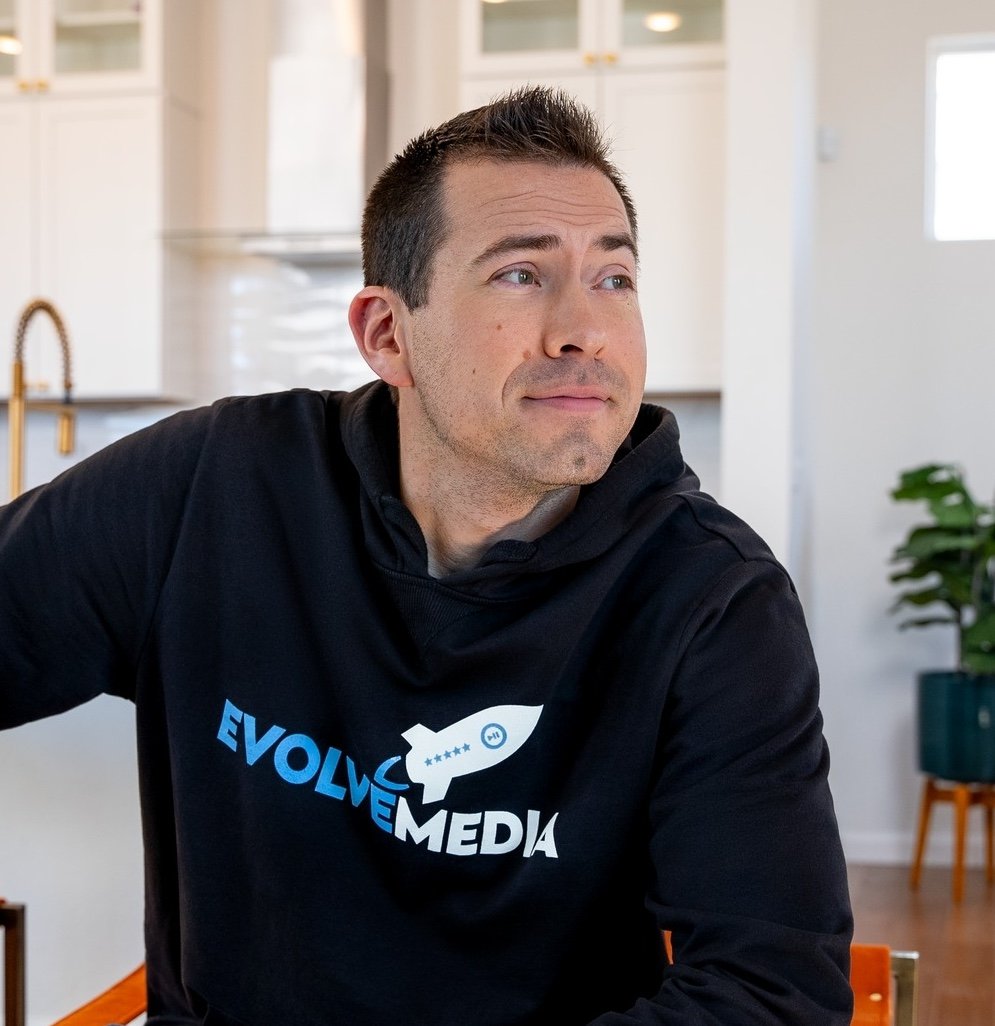
Ian Smith
Founder, Evolve Media Agency
Ian has run Evolve Media Agency since 2017 and has sold on Amazon since 2015. He and Megan run brand management, launches, PPC and in-house photo and video for Amazon, Shopify and TikTok Shop brands, including supplement brands, from Colorado. Questions about this page go straight to him at [email protected].
Common Questions
How much does it cost to start a supplement brand on Amazon?
What is the minimum order quantity for private label supplements?
How much does Amazon supplement testing cost?
What fees does Amazon charge to sell supplements?
Is a gummy more expensive to launch than a capsule?
Can I launch a supplement brand for under $5,000?
What does Evolve charge to help launch a supplement?
Check Your Launch Budget Before You Order
Bring your manufacturer and testing quotes to a free 30-minute call and we will show you where the numbers are thin and what we would cut first.
Rather email? Write Ian at [email protected]. Call or text 719-257-3557. Watch our YouTube channel, grab the free Ecom Profit Box guides, or join the newsletter.
Want Ian to Look at Your Brand?
Tell us what you sell and where you are stuck. Ian replies within one business day, and you get an email right away with a link to book a free 30-minute call.
- Brand management, PPC, listings, launches and content
- Amazon, Shopify and TikTok Shop brands
- A real reply from Ian, not a sales bot
Rather talk now? Call or text 719-257-3557 or pick a time on Calendly.