
24 Questions to Ask a Supplement Manufacturer Before You Sign
The call script for screening a contract manufacturer: what to ask, what a good answer sounds like, which answers end the call, and a scorecard to compare plants.
Short answer
Ask a supplement manufacturer to prove it follows FDA's cGMP rule (21 CFR Part 111), show a current FDA facility registration and an accredited third-party GMP certificate, explain how it identity-tests every dietary ingredient, share redacted COAs with methods and actual results, disclose its FDA inspection history, and sign a quality agreement. Then ask about MOQs, lead times, stability data and formula ownership.
Write Down Your Spec Before You Talk to Anyone
The point of these questions is not to catch a manufacturer out. It is to find out, in writing, whether the plant can make your product the way federal rules require and Amazon now checks. That matters because the legal responsibility sits with you. FDA has told brands that sell contract-made supplements under their own label that they carry "overarching and ultimate responsibility" for cGMP compliance (FDA warning letter, 2017). cGMP means current Good Manufacturing Practice, the federal rule set at 21 CFR Part 111 for how supplements are made, tested, packaged, labeled and held.
For the reasoning behind each check, read the full guide on how to vet a supplement manufacturer. This page is the script you take into the call.
Shortlist three manufacturers, not ten
Three plants that already make your dosage form (capsule, tablet, powder, gummy, liquid) are enough to compare.
Send the same written spec to all three
Ingredients and forms, amount per serving, dosage form, count per bottle, packaging, target claims such as vegan, and your first-order volume. Identical specs make quotes and answers comparable.
Ask for answers in writing
Send the questions ahead of the call and ask for written replies or documents for each. A verbal yes on a call is not something you can show Amazon, an auditor or a lawyer later.
24 Questions and What a Good Answer Sounds Like
The questions run in four groups. In the compliance and testing groups, a weak answer is usually disqualifying. In operations and money, a weak answer is a negotiating point.
1. Do you manufacture under 21 CFR Part 111, and can I see your written SOP index?
Good answer: Yes, with a list of written standard operating procedures (SOPs) covering personnel, sanitation, equipment, components, lab operations, manufacturing, packaging, holding, returns and complaints, which are the areas the rule requires written procedures for. Weak answer: "We follow GMP" with nothing to show.
2. What is your current FDA food facility registration status?
Good answer: Written proof of a current registration. Renewals are due October 1 to December 31 of each even-numbered year (21 CFR 1.230), so in late 2026, ask whether this year's renewal is filed. FDA does not publish the list, so you have to ask. Weak answer: "We are FDA approved." A registration number does not convey FDA approval or endorsement (21 CFR 1.242).
3. Which accredited third party audits your GMP, and when does the certificate expire?
Good answer: The auditing body, the standard (NSF/ANSI 455-2 is one example), the site and dosage forms in scope, and a current expiration date, plus the certificate itself. NSF's program, for example, uses an on-site audit with ongoing surveillance audits (NSF). Weak answer: A self-audit or a consultant's report.
4. Has Amazon or an Amazon-approved TIC provider accepted your GMP documentation for other brands?
Good answer: Yes, with the certificate type used. Epstein Becker Green reported in January 2026 that Amazon accepts accredited third-party audits through approved testing, inspection and certification (TIC) providers, not private, consulting or first-party audits, or FDA inspections (Epstein Becker Green). Weak answer: "Amazon is your problem."
5. When was your last FDA inspection, and did you receive a Form 483?
Good answer: The date, the outcome, and if there was a 483 (the form listing objectionable conditions FDA investigators observed), a copy of the written response with the corrective actions taken. FDA says a 483 is not a final agency determination (FDA). Weak answer: Refusing to say, or not knowing.
6. Have you received an FDA warning letter in the past five years?
Good answer: No, or yes with a clear account of what was fixed. Search FDA's warning letter database yourself either way. Weak answer: A no that a two-minute search contradicts.
7. Who is your head of quality control, and are QC duties separate from production?
Good answer: A named person with relevant training, and QC staff whose quality duties are kept separate from their other work, as 21 CFR 111.12 requires. Weak answer: The plant manager also signs off on releases.
8. How do you identity-test each incoming dietary ingredient?
Good answer: At least one appropriate identity test or exam on every dietary ingredient before it is used, with the method named for each (for example, a specific chromatography or spectroscopy method for a botanical). This is a direct requirement of 21 CFR 111.75(a). Weak answer: "The supplier sends a COA."
9. When do you rely on a supplier's COA, and how did you qualify that supplier?
Good answer: For components other than dietary ingredients only, after confirming the supplier's results with their own tests, documenting it, re-checking periodically and getting QC approval, which is what the rule requires. Weak answer: "We trust our suppliers."
10. Can I see two or three redacted finished-product COAs?
Good answer: COAs (certificates of analysis, the batch lab report) that list each test, the method, the numeric limit and the actual result, including dietary ingredient amounts, heavy metals and microbials. Weak answer: A one-page summary that says Pass.
11. Is your lab, or your outside lab, accredited to ISO/IEC 17025 for these methods?
Good answer: Yes, with the accreditation certificate and a scope that covers the methods you need. ISO/IEC 17025 is the international standard for lab competence and impartiality. Weak answer: Accredited, but not for the method used on your key ingredient.
12. Do you test every finished batch, or a statistical sample?
Good answer: Every batch, or a statistically sound sampling plan with QC-approved documentation behind it, per 21 CFR 111.75(c). Weak answer: "We test when the customer asks."
13. What stability data supports the expiration date you suggest?
Good answer: Real-time or accelerated stability data for this formula, or a plan to generate it. FDA's compliance guide says the rule does not require an expiration date, but you should have data to support any date on the label (FDA Small Entity Compliance Guide). Weak answer: "Everyone uses two years."
14. How do you handle reserve samples?
Good answer: Samples of each distributed lot, in the same container-closure system, at least twice the amount needed for all required tests, kept one year past shelf life or two years from distribution (21 CFR 111.83). Weak answer: "We keep a few bottles."
15. Can I audit the plant, or send an independent auditor?
Good answer: Yes, with reasonable notice, and it goes into the quality agreement. Weak answer: "We do not allow visitors on the floor."
16. Will you sign a written quality agreement before production?
Good answer: Yes, covering batch release records, change control, deviations, complaint forwarding and audit rights. FDA describes quality agreements in its guidance on contract drug manufacturing, and supplement brands use the same structure. Weak answer: "Our quote is the agreement."
17. Will you notify me in writing before changing an ingredient supplier, process or site?
Good answer: Yes, before the affected batch is made, with a chance for you to approve or re-test. Weak answer: "We switch suppliers all the time; it is the same ingredient."
18. What happens when a batch fails a specification?
Good answer: You are told within an agreed number of days, the deviation is investigated and documented, and the contract says who pays for rework or replacement. Weak answer: Silence, or "that never happens."
19. How fast will you forward a consumer complaint or adverse event you receive?
Good answer: Within a day or two, in writing. The brand named on the label is the responsible person for serious adverse event reports and has 15 business days to report them to FDA, with records kept for six years (21 U.S.C. 379aa-1). Weak answer: No process.
20. Do you subcontract any step, such as encapsulation, gummy deposition or packaging?
Good answer: A clear yes or no, and if yes, the subcontractor's GMP certificate and a named step. Weak answer: You find out from the label proof.
21. What is your MOQ for my spec, and the price at the next two tiers?
Good answer: The minimum order quantity (MOQ, the smallest run the plant will make) per SKU in writing, with per-unit pricing at MOQ and two larger volumes, and what is and is not included. Weak answer: A single number that changes once you pay the deposit.
22. What is the lead time from deposit to finished, released goods?
Good answer: A written range broken into ingredient sourcing, production, testing and release, so you can plan inventory. Weak answer: "Usually a few weeks" with no breakdown.
23. Who owns the formula, label artwork and Supplement Facts panel?
Good answer: You do, in writing, and you can take them to another manufacturer. Have an attorney read this clause. Weak answer: "It is our proprietary blend."
24. Will you review my label, and do you ever suggest claims?
Good answer: They check the label against the formula, and they leave claims to you and your counsel. Weak answer: They offer to add treat, cure or prevent language. See our guide to structure/function claims and the supplement label requirements.
Five Answers That End the Call
"Our facility is FDA approved"
There is no such approval for a supplement facility. Registration does not convey approval under 21 CFR 1.242, and FDA does not approve supplements before marketing (FDA).
No identity testing on dietary ingredients
Relying only on supplier paperwork for dietary ingredients does not meet 21 CFR 111.75(a). FDA also cites it in warning letters; one from January 2026 cited this exact failure alongside missing product specifications and no master manufacturing record (FDA warning letter).
No current third-party GMP certificate
Expired, out of scope, or a consultant's report instead of an accredited audit. Epstein Becker Green reported that Amazon does not accept consulting or first-party audits.
COAs with no methods or results
A COA that cannot tell you the method, the limit and the actual number is not evidence of anything.
Refuses a quality agreement, an audit or your independent testing
You carry the responsibility; a plant that will not let you check its work is asking you to carry it blind.
Smaller warnings worth a follow-up question: slow or partial replies to document requests, a sales rep who will not connect you with QC, a quote that leaves out testing costs, and pressure to pay a deposit before you have seen the paperwork.
Score Each Manufacturer Out of 30
Score each line 0 for no answer or a red flag, 1 for a vague or verbal answer, and 2 for a specific written answer backed by a document. Any red flag from the section above is an automatic stop, whatever the total.
From First Call to a Signed Quality Agreement
Send the spec and the 24 questions to three manufacturers in the same week
Same spec, same deadline. You learn as much from how fast and how completely each plant replies as from the answers themselves.
Hold a one-hour call with each, with QC on the line
Walk through any answer that came back vague. Ask to speak with the quality lead directly, not only sales.
Score all three on the same sheet
Use the 30-point scorecard. Drop anyone with a red flag before you look at price.
Visit the top plant or send an auditor
Look for ingredient quarantine areas, status tags on materials, line clearance between products and a lab that is actually in use.
Negotiate the quality agreement and supply terms together
Release records, change control, deviations, complaint forwarding, audit rights, MOQ, lead time and formula ownership, reviewed by your attorney.
Run a pilot batch and test it independently
Send retained units to an ISO/IEC 17025 accredited lab and compare the results with the plant's COA and your label before you approve full production.
When You Should Not Sign Yet, and When to Get Help
Your formula is not final
Changing ingredients after you sign resets testing, stability and label work. Finish the formula first.
You do not know your landed cost and margin
Supplements are launch-heavy: Vine units, PPC and creator samples. If the per-unit price, freight and Amazon fees leave no room, fix the economics first. Our cost to launch a supplement brand page has worked budgets.
You cannot fund independent testing
If the budget will not cover a lab test of your first batch, you are not ready to put that batch on Amazon.
Your product is drug-adjacent or uses a novel ingredient
Get a regulatory attorney involved before you pick a plant. A manufacturer cannot give you that answer.
You have not checked whether your category is gated
Read our guide to Amazon supplement category approval before you commit to an MOQ.
You do not need to hire anyone to run these questions. Where brands usually want help is after the manufacturer is chosen: building the Amazon listing, label images, A+ content and launch so the documents, the label and the listing all match. NutraIngredients reported that from March 31, 2026, Amazon checks listings against the Supplement Facts panel, so a mismatch can get a listing flagged or removed.
That is the work Evolve does inside brand management. Plans are paid upfront monthly and run month to month: Brand Support at $750 for 5 hours, Brand Manager at $1,250 for 10 hours, Brand Manager Plus at $2,000 for 20 hours, or Full Brand Management at $3,600 for 40 hours. Listing optimization is $495 per listing and the Full Launch Package is $2,495 on the pricing page. To talk it through, email Ian at [email protected], call or text 719-257-3557, or book a free 30-minute call. You can also see our supplement brand marketing page and the full supplement launch guide.
Where These Facts Come From
eCFR: 21 CFR Part 111, Current Good Manufacturing Practice for Dietary Supplements
ecfr.gov · Open source →
eCFR: 21 CFR Part 1 Subpart H, Registration of Food Facilities
ecfr.gov · Open source →
FDA: Small Entity Compliance Guide, CGMP for Dietary Supplements
fda.gov · Open source →
FDA: Dietary Supplements
fda.gov · Open source →
FDA: Warning letter on contract-manufactured products (2017)
fda.gov · Open source →
FDA: Warning letter to a supplement firm (January 2026)
fda.gov · Open source →
FDA: Form 483 Frequently Asked Questions
fda.gov · Open source →
FDA: Contract Manufacturing Arrangements for Drugs, Quality Agreements
fda.gov · Open source →
Cornell LII: 21 U.S.C. 379aa-1, Serious adverse event reporting for dietary supplements
law.cornell.edu · Open source →
NSF: NSF/ANSI 455-2 Dietary Supplement GMP Certification
nsf.org · Open source →
ISO: ISO/IEC 17025:2017
iso.org · Open source →
Epstein Becker Green: Amazon's Third-Party Supplement Testing Mandate Explained (Jan 2026)
ebglaw.com · Open source →
NutraIngredients: Amazon's new supplement policy could trigger delistings (Mar 2026)
nutraingredients.com · Open source →
About the Author
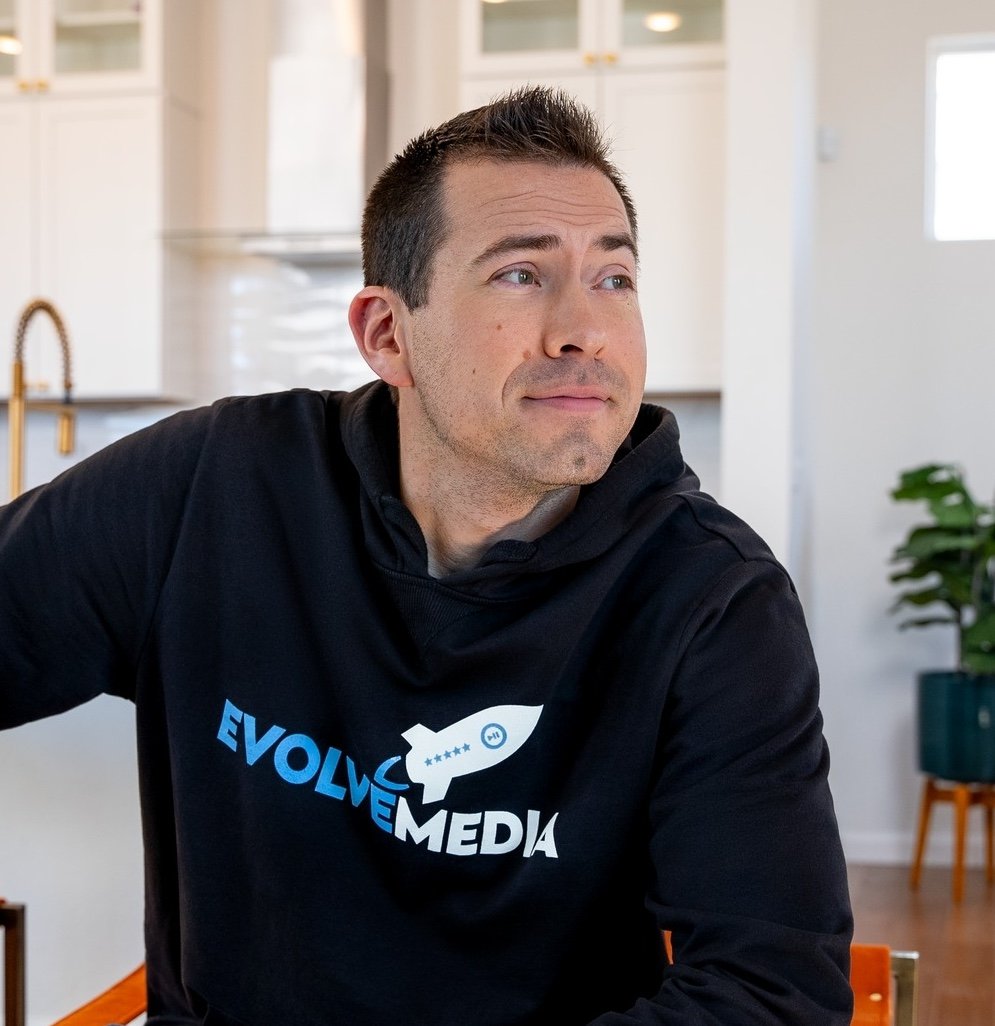
Ian Smith
Founder, Evolve Media Agency
Ian has run Evolve Media Agency since 2017 and has sold on Amazon since 2015. He and Megan run brand management, launches, PPC and in-house photo and video for Amazon, Shopify and TikTok Shop brands, including supplement brands, from Colorado. Questions about this page go straight to him at [email protected].
Common Questions
What questions should I ask a supplement manufacturer?
How do I know if a supplement manufacturer is legitimate?
What are red flags when choosing a supplement manufacturer?
Should a supplement manufacturer be FDA approved?
What is a good MOQ for a new supplement brand?
Do I still need my own lab test if the manufacturer sends a COA?
Can Evolve Media Agency tell me which manufacturer to use?
Bring Your Manufacturer's Answers to Us
Book a free 30-minute call with your scorecard and documents. We will tell you what Amazon is likely to ask for and what is still missing before you launch.
Rather email? Write Ian at [email protected]. Call or text 719-257-3557. Watch our YouTube channel, grab the free Ecom Profit Box guides, or join the newsletter.
Want Ian to Look at Your Brand?
Tell us what you sell and where you are stuck. Ian replies within one business day, and you get an email right away with a link to book a free 30-minute call.
- Brand management, PPC, listings, launches and content
- Amazon, Shopify and TikTok Shop brands
- A real reply from Ian, not a sales bot
Rather talk now? Call or text 719-257-3557 or pick a time on Calendly.