
How to Choose a UGC Agency for Amazon and TikTok
Most UGC buying guides are about creators and hooks. The things that decide whether the video is usable on Amazon are duller: the license, the signed release, and whether the file fits Amazon's specs. Here is what to check, the 15 questions to ask on the call, the red flags, and a scorecard you can fill in for each provider.
Short answer
Pick a UGC agency on four things. First, a written license that covers paid ads for as long as you will run them (perpetual is best). Second, a signed talent release from everyone on camera. Third, delivery in 16:9 for Amazon Sponsored Brands plus 9:16 for TikTok. Fourth, a script checked against Amazon's ad rules. Price comes after that. Marketplaces like soona sell creator video from $89 to $259 (Published); Evolve Media Agency sells a scripted review-style video for $495 ($1,295 for three, $2,495 for six) with a perpetual license, signed releases and 9:16, 1:1 and 16:9 cuts.
Three Things Called a UGC Agency, and Which One You Need
UGC means user-generated content: video that looks like a real customer filmed it on a phone. For a brand, it is made on purpose by a paid creator. "UGC agency" covers three different purchases, and the right questions depend on which one you are making. Decide that first, then use the rest of this page to compare the providers that sell it.
A studio that scripts and shoots
The provider writes the script, casts the talent, shoots and edits. You get a finished ad in the formats you asked for. Highest price per video, least work for you. Fits brands that need a few videos that pass Amazon moderation the first time.
A creator marketplace
You write a brief, creators apply or are matched, each films on their own phone, and you approve. Low price per video and lots of variety. You do the briefing, the reviewing and the compliance check. soona, for example, lists creator video at $89 to $259 a video (Published), with the price set by the creator level you choose, and says approved content is fully licensed, naming Amazon and TikTok Shop (soona UGC page, checked Oct 22, 2026).
A seeding or influencer platform
Creators receive product and post about it on their own channels. The output is reach and raw clips, not a listing video. Usage rights for ads are often limited or extra. Fits brands that want social proof and traffic more than ad creative.
The License and the Release Decide How Long You Can Use the Video
A UGC video you cannot legally run is worth nothing, however good it looks. These four terms decide where the video can go and for how long. Get each one in writing before you pay.
Usage rights: organic vs paid
Organic means posting on your own pages. Paid means running it as an ad. Many creator deals cover organic only, or paid for a short window. For Amazon Sponsored Brands and TikTok ads, you need paid rights.
License length
Common terms are 30, 90 or 365 days, or perpetual (no end date). A video that works in Sponsored Brands can keep running for years. Paying to renew a license on your best ad is a cost most brands forget to budget. Perpetual avoids it.
Signed talent release
The on-camera person's signed permission to use their likeness in ads, separate from the license between you and the provider. Ask for a copy of every release with the files. If a creator later objects and you have no release, you pull the ad.
Whitelisting and Spark Ads
Running ads from a creator's own account is a separate permission; see question 13 and our whitelisting agency guide.
What Amazon and TikTok Accept, From Their Own Pages
These are the published specs on Oct 22, 2026. A provider should know them without looking. If the delivery does not match, you pay for a re-edit or the ad is rejected.
Amazon Sponsored Brands video
16:9 only, at 1280 by 720, 1920 by 1080 or 3840 by 2160 pixels. 6 to 45 seconds, with 20 seconds or less recommended. MP4 or MOV, 500 MB maximum, H.264 or H.265. No black, colored or blurred bars (so a vertical video padded to 16:9 fails). Keep text out of the lower right corner, where the mute button sits. Language and on-screen text must match the marketplace. Source: Amazon Ads, Sponsored Brands video specs.
Amazon listing video
You need a Professional selling account, at least three months of selling history and live listings; Brand Registry is not required. MOV or MP4, up to 1080p, 5 GB maximum, up to four videos per ASIN, usually live within three days of approval (up to seven business days in the holidays). Source: Amazon seller blog, product video. The same page lists a 1 to 12 minute length, which is aimed at longer product videos; check the current limit in Seller Central before you order 25-second files for the listing.
TikTok in-feed ads
9:16 recommended, at least 540 by 960 pixels; 16:9 (960 by 540) and 1:1 (640 by 640) are also accepted. Up to 10 minutes, 500 MB maximum, MP4, MOV, MPEG, 3GP or AVI. TikTok provides safe-zone files that show where its buttons and captions cover the video. Source: TikTok Ads help, in-feed ads.
What it means for your order
Ask for three separate edits of every video: 9:16 for TikTok and Reels, 1:1 for social feeds, 16:9 for Sponsored Brands and A+. Framed for each one, with text inside both platforms' safe areas. A provider that delivers vertical only has sold you one-third of the job.
What Your Brief Must Include
The brief is the one-page instruction the creator works from. A weak brief is the main reason UGC comes back off-message. Whoever writes it (you or the provider), these items should be on it.
The one job of the video
Which placement (Sponsored Brands, listing, TikTok ad) and the one thing a viewer should believe after it. One video, one job.
Buyer and creator profile
Who buys the product, and who should be on camera: age range, look, setting, use case.
Claims you may and may not make
The benefits on your detail page, word for word, and a list of banned words: star ratings, review counts, prices, deals, "best," medical or results claims you cannot prove.
Hook options
Two or three opening lines drawn from your real reviews and the problem the product solves.
Shot list and length
The product moments that must appear (unboxing, in use, the result), and a target length that fits the shortest placement, usually 15 to 30 seconds.
Formats and specs
9:16, 1:1 and 16:9, captions burned in or separate, file type, and the safe areas from the section above.
Rights and release
The license term, organic and paid, the platforms, and the signed release, stated in the brief so the creator agrees before filming.
15 Questions to Ask Any UGC Agency or Platform
1. Which license do I get, and for how long?
Ask for the words "organic and paid," the platforms, and the term in years or "perpetual." A 90-day or 12-month paid license is common and fine for a test, but a Sponsored Brands video can run for years. If the answer is "full rights," ask for the clause.
2. Can I see the license before I pay?
The license should be a document you can read, not a FAQ line. If the provider will not send it before the invoice, assume the narrowest reading.
3. Is there a signed release from every person on camera?
Ask for a copy of each one with the files. Without it, a creator who changes their mind can force you to pull an ad.
4. Who owns the raw footage and the project files?
Usage rights to the finished video are not ownership of the footage. If you want to recut later, ask whether raw clips are included, at what price, and under the same license.
5. Which aspect ratios come in the delivery?
Amazon Sponsored Brands video accepts 16:9 only. TikTok prefers 9:16. Ask for 9:16, 1:1 and 16:9 as separate edits, framed for each, not a vertical video with bars added.
6. Do you know Amazon's Sponsored Brands video rules?
Ask them to name two: 6 to 45 seconds, no black or blurred bars, text out of the lower right corner where the mute button sits. A provider that cannot name one will deliver a rejected file.
7. Will the creator say anything Amazon will reject?
Star ratings, review counts, prices, deals and claims that are not on your detail page are moderation risks in Sponsored Brands. Ask who checks the script against your listing before the shoot.
8. Where can this video legally go on Amazon?
The right answer: listing video, A+ (Premium modules take video), Brand Store and Sponsored Brands, uploaded as brand content. The wrong answer: posted as a customer review or customer video. Paid content as a review breaks Amazon's rules.
9. Who writes the script and the hook?
The hook is the first one to three seconds that stop the scroll. Ask whether a person writes it from your reviews and listing, or whether the creator improvises. Both can work; you should know which you are buying.
10. How are creators chosen and vetted?
Ask how they match age, look and use case to your buyer, whether you approve the person before the shoot, and what happens if the creator does not deliver.
11. What does one revision mean here?
Ask what counts as a revision (a re-edit, a reshoot, a new creator) and how many are included. A reshoot almost always costs extra; know the price before you need it.
12. How does product get to the creator, and who pays?
Shipping samples is a real cost and a real delay. Ask who pays, whether product is returned, and when the clock starts: at signing, at brief approval, or when the creator has the product.
13. Can the creator run the video from their own account?
Running ads from a creator's handle is called whitelisting on Meta, Spark Ads on TikTok and Partnership Ads on Instagram. It needs a separate permission and often a separate fee. Ask if it is included and for how long.
14. What is the total price for what I need, in writing?
Per-video price, plus extra formats, captions, raw footage, whitelisting, rush and shipping. Marketplaces publish base prices and sell the rest as add-ons. Add them up for your actual order.
15. What will you not do?
A good provider tells you where it is the wrong fit: volume testing, influencer reach, Amazon Influencer Program content. A provider that does everything is guessing at some of it.
Red Flags That Mean Walk Away or Get It in Writing
"Full rights" with no document
If the license lives in a sales call or a FAQ line, you have no license. Ask for the clause.
No talent releases, or "the platform handles it"
You may be fine, but you cannot prove it. Ask for the release itself.
Vertical only, or 16:9 "with bars"
Sponsored Brands rejects letterboxed and pillarboxed video. A padded vertical file is not a 16:9 video.
An offer to post the video as a customer review
Paid content posted as a review or customer video breaks Amazon's Community Guidelines. That is a risk to your account, not a growth tactic.
Star ratings or "five stars" in the script
Moderation rejects review ratings on screen in Sponsored Brands, even real ones. The script is the place to catch it.
Guaranteed ROAS or sales
ROAS (return on ad spend) depends on your price, listing, reviews and bids. Nobody making the video controls those.
Prices that only exist on a call
Fine for large custom programs. For a few videos, a provider that will not state the per-video price and the add-ons in writing is pricing you, not the work.
Score Each Provider Out of 20
Give each line 0 (no or unclear), 1 (partly) or 2 (yes, in writing). Score every provider on the same lines after the call. Under 12, do not hire. Two zeros on the first four lines means do not hire, whatever the total.
When You Should Not Hire a UGC Agency
Your listing is not ready
UGC sends traffic to the same main image, price and reviews. If the listing converts below your category, fix it first. A UGC video does not rescue a weak page.
You are not running Sponsored Brands or TikTok ads yet
Without a paid placement, a $495 ad has nowhere to run except the listing. Start with listing video or photography and come back when the ad budget exists.
You need 30 hooks to test
A studio is the wrong tool for volume testing. Use a marketplace, brief tightly and pay per video; buy studio video for the winners.
You want reach, not creative
If the goal is posts on creators' own channels, you want a seeding or influencer platform, or the TikTok Shop affiliate program. Our creator outreach templates are a free place to start.
You cannot ship product
Every UGC model needs the product in someone's hands. If inventory is not landed, the order waits.
About the Author
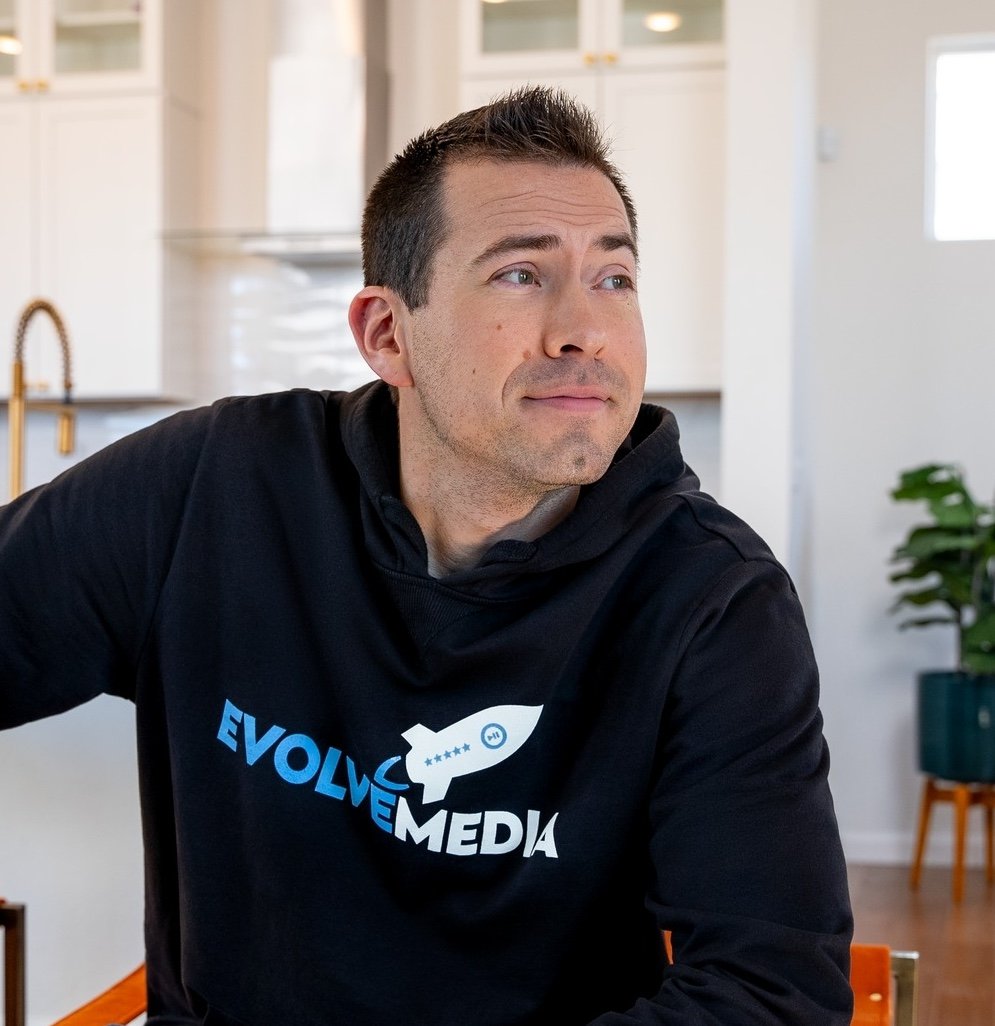
Ian Smith
Founder, Evolve Media Agency
Ian has run Evolve Media Agency since 2017 and has spent more than a decade in ecommerce, building and selling his own brands and producing listing content, video and ads for Amazon, Shopify and TikTok Shop brands. He writes every page on this site himself and the prices quoted for Evolve are the prices you pay.
UGC Agency Questions
How do I choose a UGC agency for Amazon?
What usage rights should UGC include?
What is a talent release and do I need one?
What are Amazon's Sponsored Brands video specs?
Can I post paid UGC as an Amazon customer review?
What are TikTok's video ad specs?
What are the biggest UGC agency red flags?
What does Evolve Media Agency charge for UGC?
Bring the Scorecard to the Call
Book a free 30-minute call. Ask us the 15 questions. We will tell you whether a studio video, a marketplace or your own creators fits your product and ad budget, and if it is not us, which kind of provider to call instead.