
PFAS Cookware Laws by State: What Applies in October 2026
Several states now ban cookware made with intentionally added PFAS, and others require labels or reports instead. This guide sorts the rules state by state from each state's own statute or agency page, then shows what they mean for your Amazon listing, packaging and inventory.
Short answer
As of October 2026, Minnesota (since January 1, 2025), Colorado and Maine (since January 1, 2026) ban cookware with intentionally added PFAS. Rhode Island and New Mexico bans start January 1, 2027, Connecticut's on January 1, 2028, and Vermont's on July 1, 2028. Connecticut requires PFAS labels now, California requires disclosure and limits "free of" claims, and New Jersey labels start around January 2028.
What These Laws Ban and What They Do Not
PFAS, short for per- and polyfluoroalkyl substances and often called forever chemicals, are a large family of fluorinated chemicals. In cookware they show up mainly in traditional nonstick coatings such as PTFE, the material many people know as Teflon. Minnesota's pollution agency names PTFE directly as a PFAS that its law prohibits in cookware.
Most state cookware laws turn on one phrase: intentionally added. They target PFAS a manufacturer put in the product on purpose to do a job, like a nonstick surface, not trace contamination. That is why a stainless steel, cast iron, carbon steel, glass or enameled pan is usually outside these bans, while a PTFE-coated skillet is the core target.
These are state laws, and they work differently from federal food-contact rules. FDA still authorizes certain PFAS for nonstick cookware coatings and says studies show negligible migration into food from those coatings, per its page on authorized PFAS uses. FDA authorization does not exempt you from a state sales ban. Our companion guide to food-contact rules for kitchen products covers the federal side.
Sales bans
You may not sell, offer for sale or distribute cookware with intentionally added PFAS in that state after the start date. Minnesota, Colorado, Maine, Rhode Island, New Mexico, Connecticut and Vermont are in this group, with different start dates.
Disclosure and label laws
You may still sell PFAS cookware, but the label, website and online listing must say so in approved words. California has required this since 2023 and 2024, Connecticut since July 1, 2026, and New Jersey starts about January 2028.
Reporting laws
Washington requires manufacturers to notify its Department of Ecology about cookware and kitchen supplies with intentionally added PFAS. Connecticut also requires advance notice to its environmental agency.
"Free of" claim limits
California, Colorado and New Jersey limit PFAS-free style claims. A "PFOA-free" claim on a pan that still uses another PFAS is the classic problem these rules were written to stop.
PFAS Cookware Rules by State as of October 2026
The table lists every state where we could confirm a cookware-specific PFAS rule from a primary or recent source. An earlier law firm tracker from July 2024 listed Connecticut and Vermont bans starting January 1, 2026. Both dates changed. Connecticut's own environmental agency now lists a label requirement first and a ban later, and Vermont's statute now shows July 1, 2028. If you built a plan from an older chart, recheck it.
Colorado's PFAS Cookware Rules in Plain English
Evolve is based in Colorado, so we get this question most. Colorado moved in two steps. First, its 2022 PFAS law set label rules for cookware starting January 1, 2024. Under C.R.S. 25-15-604, a manufacturer of cookware with intentionally added PFAS in the handle or any food-contact surface had to list PFAS on the label, add a statement in English and Spanish pointing to a web page with a QR code, and make that statement visible on online listings too. The same section bars a package claim that cookware is free of PFAS unless no PFAS was intentionally added.
Second, Senate Bill 24-081 added a sales ban. On and after January 1, 2026, no one may sell, offer for sale or distribute for sale or use in Colorado cookware that contains intentionally added PFAS. The bill keeps food equipment meant mainly for commercial kitchens out of the cookware definition and handles it separately, starting January 1, 2028.
What this means for an Amazon seller
If your nonstick pan uses a PTFE coating, it should not be sold to Colorado shoppers. Amazon's policy page says sellers must follow all applicable laws for every product they list, and that responsibility continues as long as the product is for sale.
Ceramic nonstick and stainless lines
Cookware with no intentionally added PFAS is outside the ban. The risk shifts to your claims. A "PFAS-free" line is only safe if your supplier documents that no PFAS was added to the coating, the handle or any food-contact part.
Commercial food equipment
If you sell to restaurants, the separate 2028 date for commercial food equipment that touches food may apply to you. Ask your attorney which bucket each SKU falls in.
California AB 1200: Disclosure and "Free Of" Limits
California does not ban PFAS cookware today. Instead, AB 1200 forces disclosure. It covers cookware with intentionally added chemicals from California's designated list in the handle or any food-contact surface, and PFAS are on that list. A 2025 bill, SB 682, would have banned PFAS cookware, and Governor Newsom vetoed it on October 13, 2025, according to Exponent, a consulting firm that sells compliance services.
Website list, since Jan 1, 2023
Under Health and Safety Code 109012, the manufacturer must post on the cookware's website the chemicals present that are on the designated list, which official lists they come from, and links to those lists.
Product label, since Jan 1, 2024
Under section 109011, the label must list the chemicals after the words "This product contains:" and include an English and Spanish statement with a web address and a QR code. The statement must also be visible on the product listing for online sales. Very small cookware with no box, wrapper or tag is exempt from the label but not from the online listing.
"Free of" claims, website since 2023 and package since 2024
Under section 109013, you may not claim cookware is free of a specific chemical if that chemical belongs to a group on the designated list, unless no chemical from that whole group was intentionally added. In practice, "PFOA-free" on a PTFE pan is the claim this was written to stop.
California's Prop 65 is a separate law. PFOA is on the Prop 65 list for developmental toxicity since 2017 and cancer since 2022, per OEHHA. Whether a given pan needs a Prop 65 warning depends on exposure, which is a question for your attorney and lab. Our CPSC and Prop 65 compliance guide explains how warnings work.
What It Means for Listings, Packaging and Inventory
Amazon sells into every state from one listing, so state laws land on national copy. Amazon's safety and compliance policy says you are responsible for compliance before you list and for as long as the product stays for sale, and that noncompliant listings can be deactivated. Amazon's public help pages we read do not describe a tool that blocks a listing from shipping to one state, so plan as if your listing reaches every state.
Listing copy
Every PFAS word on the title, bullets, description, A+ modules and images is a claim you must be able to prove. "PFAS-free", "PTFE-free", "PFOA-free" and "non-toxic" all need a document behind them. If the cookware contains PFAS, California, Colorado and New Jersey also expect the disclosure statement on the online listing itself. Our Amazon listing optimization work includes a claims pass for exactly this.
Images and A+ Content
Teams often fix the bullets and forget the infographic that says "PFOA free" in a badge. Check every image, comparison chart and video frame. Our guide to A+ Content for kitchen brands covers claim-safe layouts.
Packaging
Connecticut's approved label wording, California's "This product contains:" list and New Jersey's bilingual statement are all print decisions. If you sell PFAS cookware in those states, one box design may need to carry several state disclosures. Our packaging and label design management service handles the artwork once your attorney signs off on the words.
Inventory sell-through
Sell-through rules differ. Connecticut's agency page exempts products manufactured before the applicable ban date. Minnesota's agency says unavoidable-use exemptions do not apply to its 2025 categories, and we found no sell-through allowance on its page. We could not confirm a sell-through rule for every state, so do not assume old stock is safe. Ask your attorney before you keep selling PFAS units after a ban date.
Supplier documents
Ask your manufacturer for a signed statement listing every food-contact and handle material and whether any PFAS was intentionally added. Keep it with the purchase order for that run.
Seven Steps to Get Your Cookware Line Compliant
List every SKU and its materials
For each product, write down the coating, the handle, any gasket or lid seal, and every part that touches food. Include electric items. Maine's definition names waffle makers, electric skillets and air fryers.
Get a written PFAS statement from each supplier
Ask whether PFAS was intentionally added anywhere in the product. Get the answer in writing, tied to the model number and production run, not a general brochure.
Sort SKUs into three groups
No intentionally added PFAS, PFAS in internal or electronic parts only, and PFAS in a food-contact surface or handle. Only the third group is the main target of the bans, and the second may fall into later phases.
Map each group against the state table
For PFAS-coated SKUs, mark which states ban them now, which ban them next, and which require labels. Put the next start date on your calendar six months early.
Audit every claim on every channel
Search your Amazon listing, A+ Content, images, Shopify pages, TikTok Shop listings and packaging for PFAS, PFOA, PTFE, non-toxic and chemical-free. Delete what you cannot prove. Fix "free of" claims that fail the California, Colorado or New Jersey tests.
Have a regulatory attorney review the plan
Bring the SKU list, supplier statements and draft label wording. Ask about sell-through, which entity counts as the manufacturer for your imports, and reporting in Connecticut, Washington and Minnesota.
Update packaging and listings together
Change the box, the insert, the listing copy and the images in the same cycle so shoppers never see two different stories. Save dated screenshots of each listing version in your compliance file.
Bills and Changes to Watch
New York
Senate Bill S9073A, which would ban PFAS in cookware and other products starting January 1, 2028, passed the New York Senate on February 10, 2026. When we checked the Senate's bill page, it had not passed the Assembly and was not law.
Illinois
Some trackers list Illinois as a cookware state. The final text of Public Act 104-0231, signed in August 2025, lists cosmetics, dental floss, juvenile products, menstrual products and intimate apparel for its 2032 ban, not cookware. An earlier House version had included cookware.
Rhode Island
House Bill 7621, introduced February 11, 2026, would exempt durable food-contact items that FDA authorizes. We could not confirm that it passed, so treat the January 1, 2027 date as current. You can read the current Rhode Island statute yourself.
Minnesota and Maine rule changes
Minnesota finalized a PFAS reporting and fees rule on December 8, 2025, and Maine's amended Chapter 90 rule took effect October 7, 2025. Check both agency pages before each reorder.
When to Get Help vs Do It Yourself
Do it yourself if
Your whole line is stainless, cast iron, carbon steel or glass with no coatings, and your listings make no chemical claims. A one-hour review of this page, your supplier statement and your listing copy may be all you need.
Hire a regulatory attorney if
Any SKU has a PTFE or other PFAS coating, you hold inventory you may not be able to sell in some states, or you import and may count as the manufacturer. That is legal work, and Evolve does not do it.
Hire a brand manager or agency if
You know what the law requires but need the listing copy, images, A+ Content and packaging changed across several SKUs and channels without missing one.
Here is how Evolve helps once your attorney has settled the rules. Our prices, as of October 2026: listing optimization with keyword research and copy is $495 per listing, and graphic design for main images, infographics and Premium A+ runs $295, $495 or $595. Packaging and label design is quoted per project or done inside brand management hours. If you want one team watching every kitchen listing month to month, our Amazon brand management plans run from Brand Support at 5 hours for $750 a month to Full Brand Management at 40 hours for $3,600 a month, paid upfront. See every tier on our pricing page.
Want a second set of eyes first? Request a free Amazon listing audit, email Ian at [email protected], or call or text 719-257-3557. For the full picture of what kitchen brands need, start at our kitchen brand marketing hub or the cookware selling guide.
Where These Facts Come From
Minnesota Pollution Control Agency: 2025 PFAS prohibitions
pca.state.mn.us · Open source →
Colorado General Assembly: SB24-081 enrolled bill
content.leg.colorado.gov · Open source →
Colorado Revised Statutes 25-15-604 (public.law)
colorado.public.law · Open source →
Maine DEP: PFAS in products
maine.gov · Open source →
Connecticut DEEP: PFAS in products
portal.ct.gov · Open source →
Rhode Island General Laws 23-18.18-3 definitions
webserver.rilegislature.gov · Open source →
Rhode Island General Laws 23-18.18-4 prohibitions
webserver.rilegislature.gov · Open source →
Rhode Island General Assembly: 2026 H 7621
webserver.rilegislature.gov · Open source →
New Mexico Environment Department: PFAS Protection Act (HB212)
env.nm.gov · Open source →
Vermont Statutes: 9 V.S.A. 2494f
legislature.vermont.gov · Open source →
Vermont Attorney General: Guidance on PFAS Product Bans (2025)
ago.vermont.gov · Open source →
New Jersey Legislature: S1042 bill text
pub.njleg.state.nj.us · Open source →
Fox Rothschild: New Jersey enacts PFAS in products statute (Feb 2026)
pfas.foxrothschild.com · Open source →
California Health and Safety Code 109011 (public.law)
california.public.law · Open source →
California Health and Safety Code 109012 (public.law)
california.public.law · Open source →
California Health and Safety Code 109013 (public.law)
california.public.law · Open source →
Exponent: Governor vetoes California's latest PFAS ban
exponent.com · Open source →
Washington State Legislature: WAC 173-337-110
app.leg.wa.gov · Open source →
FDA: Authorized uses of PFAS in food contact applications
fda.gov · Open source →
OEHHA: Perfluorooctanoic acid (PFOA)
oehha.ca.gov · Open source →
Amazon Seller Central: Safety, compliance, and product restrictions
sellercentral.amazon.com · Open source →
Packaging Law: Connecticut's PFAS labeling requirement arrives (Jul 2026)
packaginglaw.com · Open source →
About the Author
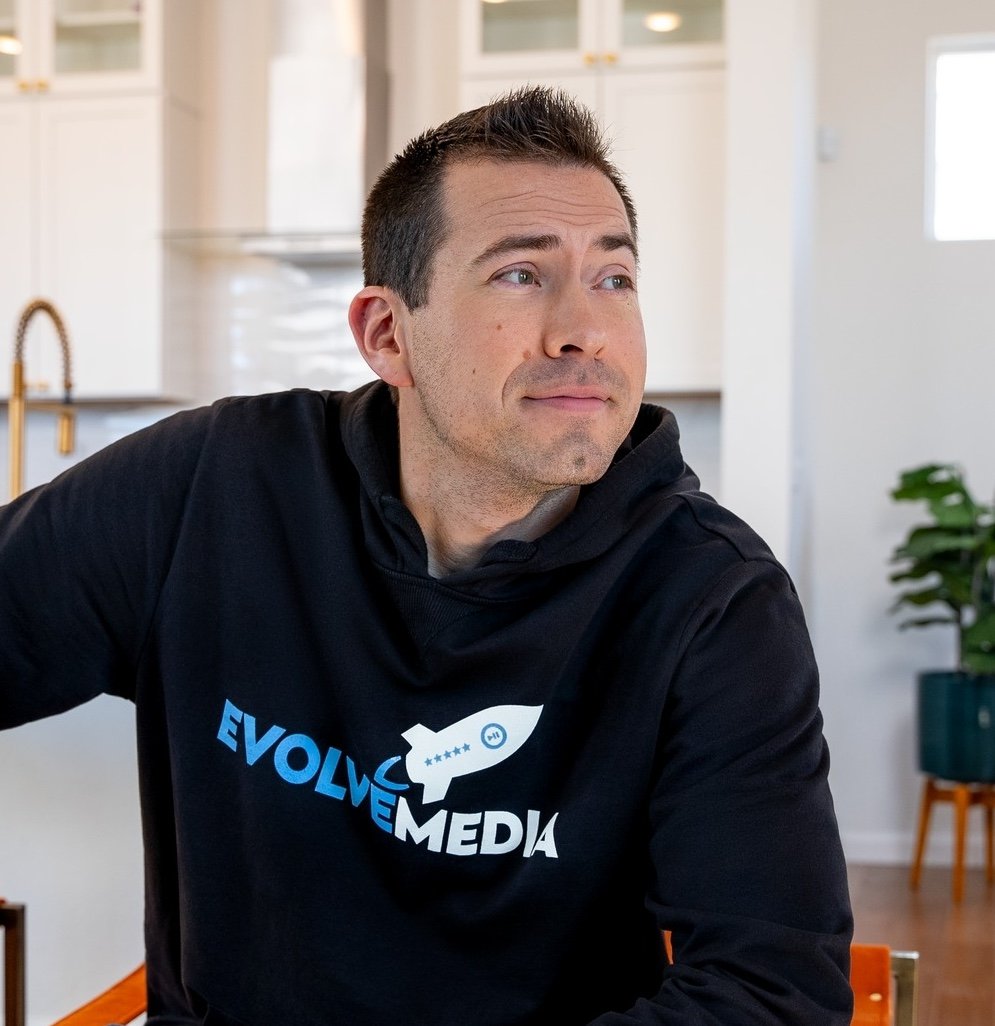
Ian Smith
Founder, Evolve Media Agency
Ian has run Evolve Media Agency since 2017 and has sold on Amazon since 2015. He and Megan run brand management, launches, PPC and in-house photo and video for Amazon, Shopify and TikTok Shop brands, including supplement brands, from Colorado. Questions about this page go straight to him at [email protected].
Common Questions
Which states ban PFAS in cookware right now?
Is Teflon or PTFE banned in these states?
Did Vermont's PFAS cookware ban start in 2026?
Can I call my cookware PFOA-free if it has a PTFE coating?
Does Amazon stop my listing from shipping to a ban state?
Do these laws cover air fryers, waffle makers and utensils?
Can Evolve tell me whether my cookware is compliant?
Get Your PFAS Claims Checked
Book a free 30-minute call and we will walk through your cookware listings line by line, flag every PFAS claim and disclosure gap, and tell you what to bring to your attorney.
Rather email? Write Ian at [email protected]. Call or text 719-257-3557. Watch our YouTube channel, grab the free Ecom Profit Box guides, or join the newsletter.
Want Ian to Look at Your Brand?
Tell us what you sell and where you are stuck. Ian replies within one business day, and you get an email right away with a link to book a free 30-minute call.
- Brand management, PPC, listings, launches and content
- Amazon, Shopify and TikTok Shop brands
- A real reply from Ian, not a sales bot
Rather talk now? Call or text 719-257-3557 or pick a time on Calendly.