
Best Streaming TV (CTV) Ad Platforms for Ecommerce in 2026
Streaming TV used to need a $50,000 commitment. Several platforms now let a $1M brand start for a few hundred dollars, and two of the biggest changed owners this year. We checked each platform's own pages on November 19, 2026.
Short answer
If you sell on Amazon, start with Amazon Streaming TV (no minimum, Amazon sales reporting). For Shopify brands, Vibe (from $500 or $50 a day, CPM $15 to $35, now owned by Walmart) is the easiest first test, and Roku Ads Manager adds shoppable ads with Shopify checkout. Universal Ads has no minimum. Tatari starts at $350 a week for retargeting and $5,000 a week for prospecting. MNTN keeps an undisclosed margin, and tvScientific is quote only.
Access and Measurement for a $1M to $10M Brand, Then Price Transparency
We read each platform's pricing, product or help pages on November 19, 2026, and recorded minimums, how media is billed, fees or margins, contracts and ownership. Then we ranked for a $1M to $10M ecommerce brand running its first or second CTV test: low or no minimum and clear sales measurement first, then price transparency, then reach.
The finding that should change how you shop: the low-minimum platforms now come from retailers and TV companies, not only startups. Amazon and Walmart (through Vibe) both sell self-serve streaming TV tied to their shopping data, and Roku and Comcast sell their own. That makes measurement the main difference, so choose by where your sales happen.
No minimum
Amazon Streaming TV and Universal Ads.
Published low entry
Vibe from $500; Tatari retargeting from $350 a week.
Minimum not published
Roku Ads Manager (about $500 reported) and MNTN.
Quote only
tvScientific.
Pick by Where Your Sales Happen
Mostly Amazon
Amazon Streaming TV.
Mostly Shopify
Vibe or Roku Ads Manager.
Need the ad made too
MNTN Creative-as-a-Subscription, with a media commitment.
Ready to scale and test linear
Tatari.
7 CTV Platforms, Ranked for Ecommerce Brands
Amazon Streaming TV (formerly Sponsored TV)
Self-serve TV ads in the Amazon Ads console · no minimum spend
What it does: Streaming TV ads on Prime Video, Fire TV, Twitch and third-party streaming apps, bought in the same console as Sponsored Products, with Amazon shopping signals for targeting and closed-loop sales reporting. Amazon says self-service streaming TV has no minimum spend or fees and is open to Brand Registry sellers, vendors, agencies and brands whether or not they sell on Amazon. Amazon has folded Sponsored TV into its wider "Streaming TV" offering.
It ranks first for $1M to $10M brands that sell on Amazon because the measurement closes the loop to Amazon sales and the setup is the console you already use. Streaming TV bought through Amazon DSP is a separate route with a $10,000 recommended minimum self-service and $50,000 managed.
Self-service: no minimum spend, no fees, CPM billing, daily budgets. Through Amazon DSP: $10,000 recommended campaign minimum self-service, $50,000 minimum managed service.
Source: Amazon Ads Streaming TV page · checked Nov 19, 2026
Vibe (Walmart Connect)
Self-serve streaming TV for SMB and mid-market · from $50 a day
What it does: Self-serve CTV built for performance and ecommerce marketers: pick audiences and apps, upload or generate creative, launch with a card, and pay only for the CPM shown. Walmart agreed to buy Vibe on June 23, 2026, and the deal closed August 4, 2026, so Vibe now sits inside Walmart Connect alongside VIZIO data.
Its pricing page describes campaigns starting at $500 with no contracts or minimums and shows a $15 to $35 CPM range in its rate simulator. It is the easiest first CTV test for a Shopify brand.
Starts at $500 with no contract or minimum, per its pricing page; its own guides cite $50 a day. Rate simulator shows CPMs of $15 to $35. No platform fee listed. On-demand campaign management available.
Source: vibe.co pricing page · checked Nov 19, 2026
Roku Ads Manager
Self-serve ads on the Roku platform, with Shopify shoppable ads
What it does: Roku's own self-serve buying tool for ads on Roku devices and The Roku Channel, with tracking pixels for cross-channel measurement. When it launched, Roku and Shopify announced shoppable ads that let Shopify merchants sell with on-screen checkout using the Roku remote, which no other platform here offers.
Roku does not publish a minimum; its help center says you can set any budget for a draft and it is checked against your account's budget cap when you publish. Trade press commonly reports campaigns starting around $500. Treat that as an estimate.
No official minimum published. Budgets are checked against an account budget cap. Commonly reported starting point about $500 per campaign; estimate only. CPM-based.
Source: Roku Ads Manager help center · checked Nov 19, 2026
Universal Ads (Comcast)
Self-serve access to premium TV networks · no minimum spend
What it does: Comcast's self-serve platform for buying streaming TV across its Universal Audience Network, which it says reaches up to 90% of US households across more than 20 premium networks. Anyone can open an account with no contract or upfront commitment, and it markets itself to small and local businesses.
No minimum spend and no contract, per its site. CPMs and rates are not published.
Source: universalads.com (no published rates) · checked Nov 19, 2026
Tatari
Linear and streaming TV with outcome measurement · self-serve from $350 a week
What it does: Buys and measures linear and streaming TV together, with outcome-based measurement and incrementality options and optional managed services. Its own comparison page lists self-serve CTV retargeting from $350 a week and prospecting from $5,000 a week, which puts real prospecting at about $20,000 a month.
Self-serve CTV retargeting from $350 a week. Prospecting from $5,000 a week. Managed services and linear TV by quote.
Source: tatari.tv comparison page · checked Nov 19, 2026
MNTN
Performance CTV with Creative-as-a-Subscription · margin not disclosed
What it does: Self-serve performance CTV with site-visit attribution and Creative-as-a-Subscription, which gives video production credits in exchange for a minimum media commitment. Its help center says it bills on a dynamic CPM, charges no separate service or technology fees, and keeps an undisclosed margin from media spend.
It ranks below Vibe and Amazon for smaller brands because the margin is not shown and the creative program is tied to a media commitment.
Dynamic CPM per thousand impressions. No separate fees; MNTN keeps an undisclosed margin from media spend. Minimum not stated in its help center. Creative-as-a-Subscription requires a minimum media commitment.
Source: MNTN help center, pricing model · checked Nov 19, 2026
tvScientific by Pinterest
Outcome-focused CTV buying · quote only
What it does: CTV buying optimized to outcomes such as site traffic, app installs and sales, with cost-per-conversion reporting. The site is now branded "tvScientific by Pinterest." It is known for outcome-based pricing options, but the site does not publish a pricing model or minimum, so it ranks last here.
No pricing model or minimum on the site. Demo request.
Source: tvscientific.com (no published price) · checked Nov 19, 2026
What a First Test Costs
How to Run a CTV Test That Tells You Something
Low minimums mean a $1M to $10M brand can now buy streaming TV for the price of a week of Meta ads. They do not mean a small test will tell you much. TV works on reach and frequency, so a test needs enough spend in one place for long enough to move something you can measure. Most failed CTV tests fail because they spread $1,000 across the whole country for two weeks.
A test that can teach you something: pick one or two regions, run for four to six weeks, and compare sales in the test regions with similar regions that saw no TV. Watch branded search, direct traffic and new customers, plus Amazon sales if you sell there. Amazon's Streaming TV reports Amazon purchases directly; on the others, add a "how did you hear about us" survey and expect platform-reported results to look better than the holdout. Our incrementality testing guide covers the method.
A simple budget rule keeps a first test honest. Decide the most you are willing to spend to learn whether TV works for you, usually one to two months of what you spend on your smallest paid channel, and put all of it into one or two regions. Set the frequency cap so each household sees the ad a few times a week. Write down before launch what result would make you continue: for example, branded search up a set percentage in test regions compared with the holdout. Without that line drawn in advance, every test looks promising.
The creative matters more than the platform. A TV ad needs to work with the sound on, on a big screen, from across the room, which is different from a scroll-stopping vertical ad. Our CTV advertising guide covers the channel in depth, and our Amazon Sponsored TV guide covers who should test Amazon's version first.
Sell on Amazon
Start with Amazon Streaming TV for closed-loop sales data.
Sell mainly on Shopify
Start with Vibe or Roku Ads Manager.
Ready for $20K+ a month
Tatari, or MNTN if you need creative made.
Any platform
Test by region with a holdout; do not trust platform-reported ROAS alone.
Five Questions to Ask Any CTV Platform
What is the all-in CPM, including any margin?
MNTN keeps an undisclosed margin. Vibe says the CPM you see is what you pay. Ask every platform.
Which apps and networks will my ads run on?
Get placement-level reporting so you know where your money went.
How is a sale attributed to a TV view?
Ask about the attribution window and whether you can run a regional holdout.
What creative specs do you need?
Most need 15- or 30-second, 1080p video. Some offer AI or paid creative help.
Is there a contract or minimum for the plan you are quoting?
Self-serve tiers usually have none; managed tiers often do.
About the Author
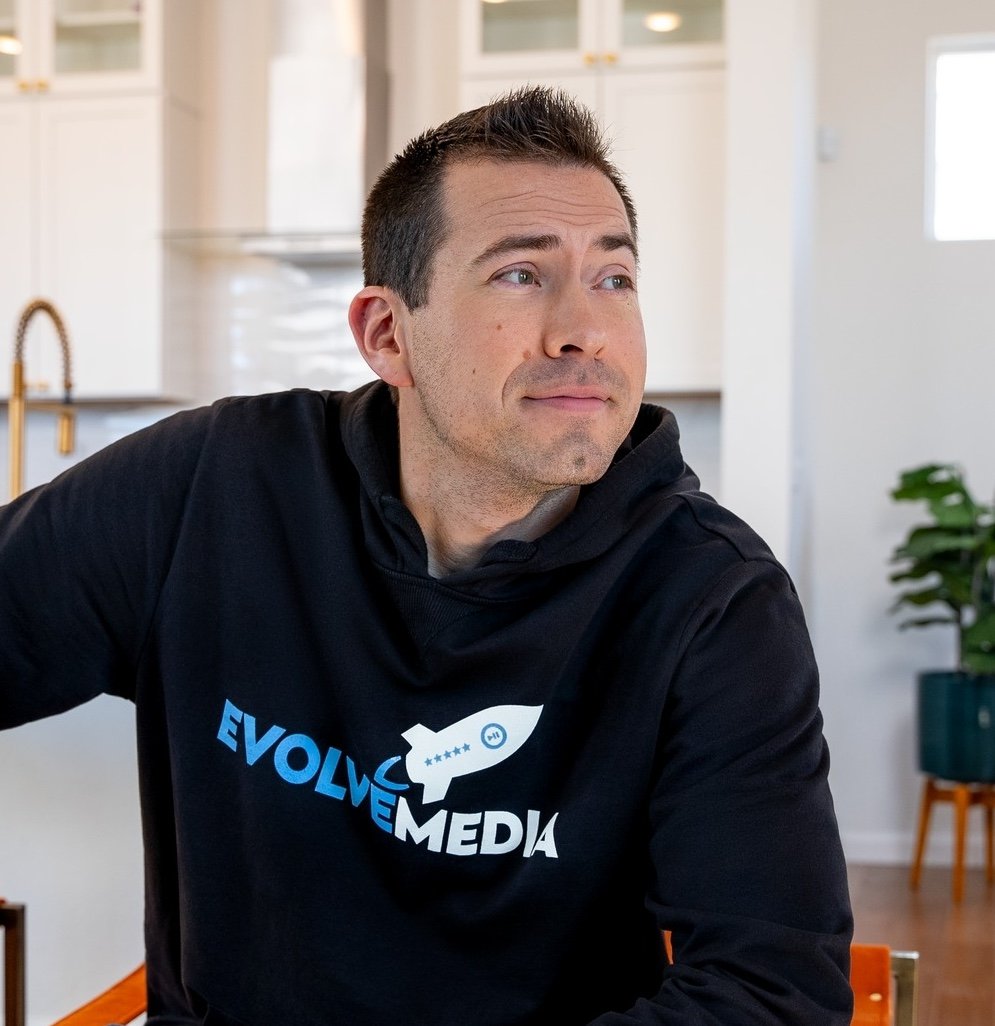
Ian Smith
Founder, Evolve Media Agency
Ian has run Evolve Media Agency since 2017 and has spent more than a decade in ecommerce, building and selling his own brands and running listings, content and ads for Amazon, Shopify and TikTok Shop brands. He writes every page on this site himself, and he checked every term on this page against the platform's own site.
CTV Advertising Questions
What is the best CTV ad platform for a small ecommerce brand?
How much does CTV advertising cost?
Is there a minimum spend for Amazon Sponsored TV?
Who owns Vibe?
Vibe or MNTN?
Can I sell directly from a TV ad?
How do I measure CTV results?
How long should a CTV test run?
Do I need a TV commercial?
How did you rank these platforms?
Need a TV Ad That Sells?
We produce product video and streaming TV ads built for the big screen. Book a free call to plan your first CTV test and the creative for it.
Want Ian to Look at Your Brand?
Tell us what you sell and where you are stuck. Ian replies within one business day, and you get an email right away with a link to book a free 30-minute call.
- Brand management, PPC, listings, launches and content
- Amazon, Shopify and TikTok Shop brands
- A real reply from Ian, not a sales bot
Rather talk now? Call or text 719-257-3557 or pick a time on Calendly.