
NSF vs USP vs Informed Sport: Which Seal Your Supplement Needs
Third-party seals all promise that what is on the label is in the bottle, but they test different things, on different schedules, for different buyers. Here is what each certifier says its program does, what it costs where a price is published, and how each one connects to Amazon.
Short answer
NSF/ANSI 173 (NSF Contents Certified) and USP Verified check that a supplement contains what the label says and stays under contaminant limits, with facility audits. NSF Certified for Sport, Informed Sport and BSCG Certified Drug Free add testing for substances banned in sport. Amazon lists NSF, USP, Informed (INFORMED), BSCG, SGS, GRMA and Clean Label Project as Compliance Fast-Track organizations for supplements.
What a Supplement Certification Actually Proves
FDA does not approve supplements before they are sold, and it does not certify brands. A third-party seal is a private program: an outside organization checks your product against its own standard, and if you pass, you pay to keep using its mark. That makes certification optional under federal law, though some buyers and sports leagues treat it as required.
The programs on this page fall into two groups. Quality programs confirm identity and potency (the ingredients and amounts on the label are really there) and check for contaminants such as heavy metals and microbes. Sport programs add a screen for substances banned by anti-doping bodies and pro leagues, often tested lot by lot. A lot (or batch) is one production run with one lot code.
Two terms come up constantly. cGMP means current Good Manufacturing Practice, the federal manufacturing rules for supplements in 21 CFR Part 111. ISO 17025 is the international accreditation standard for testing labs. Several programs below describe auditing the factory against cGMP rules and testing in ISO 17025 accredited labs.
None of these seals proves a product works. USP's own FAQ says its program verifies ingredients and amounts and does not address effectiveness. Keep that in mind when you write claims around a seal, and keep the claims on the right side of the line covered in our structure/function claims guide.
The Five Programs, As Each Certifier Describes Them
NSF/ANSI 173 (NSF Contents Certified)
NSF describes NSF/ANSI 173 as the only American National Standard for testing and certifying dietary supplements, and NSF maintains it. NSF says certification has three parts: a label claim review, a toxicology review of intentionally added ingredients, and a contaminant review for undeclared ingredients and unacceptable contaminant levels. Its Amazon FAQ lists the contaminants it assesses: lead, mercury, arsenic, cadmium and chromium (VI); aerobic microbes, yeast and mold, and Enterobacteriaceae, with Salmonella, E. coli and Staphylococcus aureus as the named pathogens; mycotoxins; and pesticides when the product contains botanicals. NSF says it audits annually and periodically retests certified products. Certified products carry the NSF Contents Certified mark.
NSF Certified for Sport
NSF's sport site lays out three steps: GMP certification of the facility, contents testing and certification (label content, microbes, heavy metals and product-specific tests, annually), and testing of production lots for banned substances before the mark goes on the label. It says the program covers 290 banned substances, with facility audits annually or twice a year depending on grade. NSF's consumer page says MLB, NHL and CFL clubs may only provide and recommend Certified for Sport products, and that the NFL, PGA and LPGA recommend the certification. Some older NSF pages give a count of 280, so check the current figure when you apply.
USP Verified (Dietary Supplement Verification Program)
USP, the nonprofit that publishes the USP-NF compendium of quality standards, says its program audits the manufacturing site against 21 CFR Part 111 and USP General Chapter 2750, reviews quality control and manufacturing documents, and tests product samples. Its FAQ says a verified product must contain the stated ingredients in the stated amounts, meet limits for contaminants such as heavy metals, pesticides and microbes, and dissolve or disintegrate properly. After verification, USP says it runs off-the-shelf market testing, document review and facility audits on an annual basis.
Informed Sport and Informed Choice
Both are run by LGC, a testing company, and use the same ISO 17025 accredited screen for more than 285 prohibited substances. Informed Sport says every batch, including every flavor, is tested before release, starting with a minimum of three finished-product samples before certification, plus one to four retail blind tests a year. Informed Choice is a retail monitoring program that tests at least twelve lots a year at random through blind purchases. Informed Sport says it was built with UK Anti-Doping for elite and drug-tested athletes; Informed Choice targets active people outside strict doping control.
BSCG (Banned Substances Control Group)
BSCG lists several programs. Certified Drug Free tests every finished product lot (or monthly for ingredients) for more than 450 banned substances, with annual label claim and contaminant testing and an initial quality and GMP audit. Certified Quality tests label claims, heavy metals, pesticides, microbes and the same banned substance menu once a year, and BSCG says that annual testing is not designed for anti-doping protection. BSCG also offers Certified GMP for brands and Certified Facility audits on a two-year cycle.
What Each Seal Tests and How Often
This table condenses each program's own description. Where a certifier does not publish a detail, the table says so rather than guessing.
Notice the split. If your buyer is a tested athlete, the questions that matter are banned substance coverage and whether every lot is tested. If your buyer is a general wellness customer, the questions are identity, potency, contaminants and factory audits. A product can hold one seal from each group, and some brands do.
Certification Costs: What Is Actually Published
Most certifiers do not post product certification prices. NSF, USP, Informed Sport and BSCG all route brands to a quote form, and their fees depend on the formula, the number of products, the number of lots and the factory. Remember that each of these organizations sells the certification, so its own pricing material is a sales document. Here is everything we could find in writing as of October 2026.
NSF: priced per product in its Seller Portal
NSF's Amazon FAQ (dated April 5, 2024) says there is no single fee per ASIN. Costs are built from contaminant, adulterant, label claim verification and certification fees, and NSF's Seller Portal calculates the price for your product. No dollar figures are published.
USP and Informed Sport product programs: quote only
Neither USP's program pages nor Informed Sport's certification process page lists a fee. Both direct brands to contact them.
Informed Manufacturer (facility program): published
In a March 2025 webinar deck, LGC published annual prices for its Informed Manufacturer site certification, which covers the factory, not your product. By audit category A through E, the fee runs from 4,240 to 7,290 euros, or 3,750 to 6,450 pounds, and includes the desk audit, onsite inspection, swab testing and logo license. Travel for the onsite visit is extra, and sites without an accepted quality standard pay an added 570 euros (500 pounds) at certification.
BSCG: quote only
BSCG's Get Certified page publishes no fees and asks brands to contact it.
Amazon testing, for comparison
A BSCG article dated September 17, 2026 compiled consultant quotes for Amazon TIC testing (TIC means testing, inspection and certification provider): about $250 to $1,000 for a standard new product and $500 to $4,500 or more for the high-risk categories. BSCG sells testing, and these are observed quotes, not rate cards. The same article reports that certification fees replace the TIC fee for Fast-Track products, but says Fast-Track applies only to general supplements, not the high-risk categories. Our Amazon supplement testing guide has the full breakdown.
How Certifications Connect to Amazon's Supplement Rules
Amazon's dietary supplements policy requires every supplement to meet the federal labeling and manufacturing rules, and requires products in five higher-risk groups (bodybuilding, joint health, sexual enhancement, sports nutrition and weight management) to meet NSF/ANSI 173-2024 or an equivalent for testing. You do not need a seal to sell. You can prove compliance through one of Amazon's eight authorized TIC providers instead, as our Amazon supplement policy guide explains.
Certification can shorten that path. Amazon's Compliance Fast-Track page lists seven organizations for dietary supplements: BSCG, Clean Label Project, GRMA, INFORMED, NSF, SGS and USP. Amazon says that when a product is certified or verified by a participating organization, it may validate compliance automatically, and new products can list faster. Amazon charges nothing to take part; you pay the certifier. NSF's FAQ says products certified to NSF/ANSI 173 or NSF 229 are automatically compliant with Amazon's policy, and Nutritional Outlook reported in December 2025 that USP Verified products had joined Fast-Track.
Amazon draws a line between the two words. Certification gives you a public mark for the package. Verification is private test data that the lab shares with Amazon at your request, with no mark. Both can qualify for Fast-Track.
The most common snag, per Amazon's FAQ, is a mismatch. If the ASIN, UPC, brand name or model number in the certifier's records does not match your listing, a certified product can stay suppressed. Send your certifier the exact identifiers from Seller Central before they file.
How to Pick a Certification in Six Steps
Name the buyer who will check the seal
Informed Sport and BSCG both describe their sport programs as built for tested athletes and drug-tested personnel such as the military. A general wellness shopper is asking a different question: is what the label says really in the bottle? If none of your buyers will look for a seal, it may add cost without adding sales, and Amazon testing through a TIC provider may be all you need.
Check your Amazon category
If your product sits in one of Amazon's five higher-risk groups, you need NSF/ANSI 173-2024 testing or an equivalent anyway. Sources disagree on whether Fast-Track covers those groups: NSF says products certified to NSF/ANSI 173 are automatically compliant, while BSCG (September 2026) and AHPA (December 2025) reported that Fast-Track applies to general supplements and not the high-risk categories. Price certification against plain TIC testing, and get the certifier's answer for your category in writing.
Confirm your manufacturer can pass the audit
Every program audits or reviews the factory. Ask your manufacturer which certifiers have already audited the site and for the current certificates. Our manufacturer vetting guide covers what to request.
Get written quotes from two or three programs
Ask each for first-year cost, renewal cost, cost per additional lot or flavor, turnaround time, and exactly what it sends to Amazon. Ask whether flavor variants or bottle sizes count as separate products.
Match the testing schedule to your production
Every-lot programs are easiest to budget for brands that run a few large batches. Annual or random-lot programs mean fewer paid tests for brands that produce often. Do the math on your own production calendar.
Line up identifiers and label art before you apply
Use the same brand name, UPC and product name across the certifier, Amazon and the package. Then add the mark to your label only after the certifier approves the artwork and the logo use.
When to Get Help vs Do It Yourself
Do it yourself if
You sell one or two products outside Amazon's higher-risk groups, your manufacturer already holds a current third-party cGMP certificate, and no buyer has asked for a seal. In that case you may not need certification at all. Apply directly with the certifier if you do want one; the programs walk brands through their own process.
Talk to a regulatory attorney if
You are unsure whether an ingredient is allowed, whether a claim you want to print is a disease claim, or whether your product is a supplement at all. No certifier and no agency can answer those for you.
Get brand management help if
You have several SKUs with renewal dates, Amazon notices and a launch calendar to keep in sync, or a certified product is still suppressed and you cannot tell why. That is coordination work, and it is what a brand manager is for.
How Evolve helps. Evolve Media Agency was founded in 2017 by Ian Smith, who has sold on Amazon since 2015. We are a husband-and-wife team in Colorado backed by AI agents, and we work with supplement brands including Liquid Health and Purely Optimal. We do not test products or pick a certifier for you. We keep the work around certification moving: tracking renewal and Account Health dates, matching identifiers across the certifier and Seller Central, adding an approved mark to label art, and rebuilding images and listings so they match the certified package.
Our Amazon brand management plans are paid upfront monthly and run month to month, and hours do not roll over: Brand Support, 5 hours for $750; Brand Manager, 10 hours for $1,250; Brand Manager Plus, 20 hours for $2,000; and Full Brand Management, 40 hours for $3,600. Work beyond a plan is $150 an hour. Packaging and label design is quoted per project or done inside plan hours, and fixed-price work such as listing optimization at $495 per listing is on our pricing page. See how this fits a supplement catalog on our brand management for supplement brands page.
Email Ian at [email protected] or call or text 719-257-3557 with your product, your category and any Amazon notice you have received. We will tell you whether a certification is worth it for your situation, or whether you can skip it.
Where These Facts Come From
NSF: Compliance with Amazon's Dietary Supplements Policy FAQ
nsf.org · Open source →
NSF: Dietary Supplement and Vitamin Certification
nsf.org · Open source →
NSF: Certified for Sport Program
nsf.org · Open source →
NSF Sport: Get Certified
nsfsport.com · Open source →
USP: FAQs, USP Verification Services
usp.org · Open source →
Informed Sport: Certification Process
sport.wetestyoutrust.com · Open source →
Informed Sport: Informed Sport vs Informed Choice
sport.wetestyoutrust.com · Open source →
LGC Informed: Informed Manufacturer webinar, March 2025 (pricing slides)
manufacturer.wetestyoutrust.com · Open source →
BSCG: Get Certified
bscg.org · Open source →
BSCG: Cost to Get a Supplement Tested for Amazon (Sept 17, 2026)
bscg.org · Open source →
Amazon Seller Central: Compliance Fast-Track program
sellercentral.amazon.com · Open source →
Amazon Seller Central: Dietary supplements policy
sellercentral.amazon.com · Open source →
Nutritional Outlook: USP accepted into Amazon's Compliance Fast-Track program (Dec 5, 2025)
nutritionaloutlook.com · Open source →
eCFR: 21 CFR Part 111
ecfr.gov · Open source →
AHPA: Amazon expanding TIC cGMP requirement to all dietary supplements (Dec 2025)
ahpa.org · Open source →
About the Author
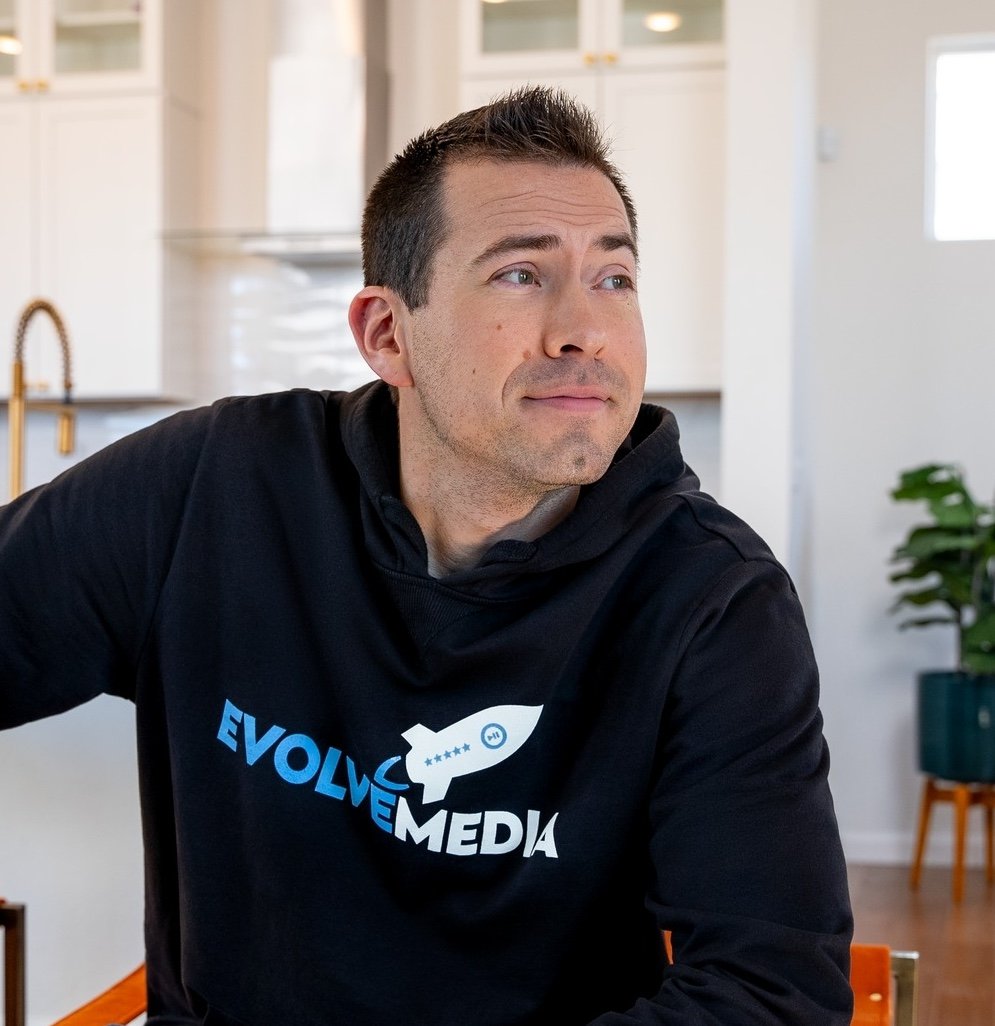
Ian Smith
Founder, Evolve Media Agency
Ian has run Evolve Media Agency since 2017 and has sold on Amazon since 2015. He and Megan run brand management, launches, PPC and in-house photo and video for Amazon, Shopify and TikTok Shop brands, including supplement brands, from Colorado. Questions about this page go straight to him at [email protected].
Common Questions
Is NSF or USP better for supplements?
What is the difference between Informed Sport and Informed Choice?
Does Amazon require NSF certification for supplements?
How much does NSF Certified for Sport cost?
Can I put a certification logo on my label before I am certified?
Does a third-party seal mean a supplement works?
Can Evolve get my supplement certified?
Not Sure a Seal Is Worth It?
Book a free 30-minute call with your product and category. We will walk through what Amazon needs, what your buyers look for, and whether certification pays for itself.
Rather email? Write Ian at [email protected]. Call or text 719-257-3557. Watch our YouTube channel, grab the free Ecom Profit Box guides, or join the newsletter.
Want Ian to Look at Your Brand?
Tell us what you sell and where you are stuck. Ian replies within one business day, and you get an email right away with a link to book a free 30-minute call.
- Brand management, PPC, listings, launches and content
- Amazon, Shopify and TikTok Shop brands
- A real reply from Ian, not a sales bot
Rather talk now? Call or text 719-257-3557 or pick a time on Calendly.