
Amazon's Dietary Supplement Policy: What It Requires in 2026
Amazon's supplement policy now reaches every supplement, not only the high-risk ones. Here is what it asks for, section by section, in plain English, with the rule it comes from.
Short answer
As of October 2026, Amazon's dietary supplement policy requires every supplement to comply with FDA labeling and cGMP rules, list the brand, manufacturer, ingredients and unit count, show the full label in images, avoid disease and drug claims, and prove third-party cGMP certification through an Amazon-authorized testing, inspection and certification (TIC) provider. Five high-risk categories also need contaminant and adulterant testing.
What Amazon Treats as a Dietary Supplement
Amazon's dietary supplements policy starts from federal law. It notes that FDA regulates the manufacturing, packaging, storing and labeling of supplements under the Federal Food, Drug, and Cosmetic Act and the Dietary Supplement Health and Education Act, then adds Amazon's own listing, document and testing requirements on top.
The policy does not rely on how you categorize the product. Amazon says it may treat a product as a supplement if the listing, label or marketing shows any of the following, and it notes that a product with a Nutrition Facts panel can still fall under the policy if the listing includes one of these signals. If you sell a functional gummy, a protein powder or a drink mix with benefit language, read this policy as if it applies to you.
A Supplement Facts panel
The clearest signal. If your label has one, the policy applies.
A statement such as Dietary Supplement or Herbal Supplement
The statement of identity on the front label counts on its own.
Claims about vitamins, minerals, herbs, amino acids or botanicals
Ingredient-led copy can pull a product into the policy even if it is sold as a food.
Dosing or serving instructions
Language like take two capsules daily is enough.
Health benefit or structure/function claims
Amazon's examples include supports immune health and promotes joint flexibility.
What Amazon Asks For on Every Supplement Listing
The policy sets four groups of rules for the product detail page: listing attributes, images, claims and offers. They apply to every supplement before any testing question comes up, and they are where most avoidable deactivations start. Amazon's policy also names the laws it expects you to meet: 21 CFR 101 for food labeling, and 21 CFR 111 or 21 CFR 117 (or an equivalent) for manufacturing practice.
The image rule is the one brands miss most. Amazon wants to see the actual label on the actual product, so a clean rendered bottle with no Supplement Facts image will not satisfy it. When you submit documents and images for review, Amazon also says they must be authentic, unmodified and not computer or AI generated, must show all sides of the product or packaging, and must match the product that was tested. Our supplement label requirements guide covers what the label itself has to say under FDA rules.
Claims That Get a Supplement Listing Removed
Amazon's claims rules apply to listing attributes and product images, and its broader misleading and prohibited claims policy applies to images, descriptions, packaging and marketing materials across all categories. The common thread is the line FDA draws: a supplement may describe effects on normal structure or function, but a claim to diagnose, cure, mitigate, treat or prevent a disease belongs to approved drugs.
FDA logo or FDA approved
No FDA logo, and no FDA approved claim unless the product actually has FDA approval. FDA does not approve supplements before sale.
Disease claims, stated or implied
No claims to diagnose, cure, reduce, treat or prevent a disease unless FDA approved the statement. The misleading claims policy lists examples of diseases products cannot claim to address, including diabetes, depression, obesity, flu, cancer and Alzheimer's disease.
Drug and controlled substance comparisons
No claims that a product works like, replaces or matches a prescription drug or controlled substance, and no names that could be confused with one. Amazon's examples include GLP-1, Viagrex and TestosterX.
Steroid-like effects
No claims of effects like an anabolic steroid, such as Legal Steroids.
Tester and resale labels
No direct labeling that says tester, not for retail sale or not intended for resale.
Disease names in keywords
Disease words in backend search terms count as claims too.
Ingredient weights that do not match the panel
No converting a 500mg extract into a 10,000mg raw herb equivalent, no weights without the ingredient name, and no weights without the portion size. Mathematically equal units that match the panel are allowed.
Non-GMO without proof
A Non-GMO claim needs a product-level Non-GMO Project Verified or Nutrasource IGEN certificate, a PCR test report from an ISO 17025 lab dated within 12 months that covers high-risk ingredients, or a USDA Organic certificate naming the product.
The cGMP Certificate, TIC Providers and Extra Testing
Every supplement must be made in a facility that complies with FDA's current good manufacturing practice rules (cGMP) at 21 CFR 111 or 117, or an equivalent. Amazon wants that shown by a third-party audit or certification performed by an accredited third party, and the certificate must be in good standing and not expired. Private audits, first-party audits, consulting audits and FDA inspections are not accepted. A facility with a current GFSI food safety certification may satisfy the requirement.
NutraIngredients reported in December 2025 that Amazon was rolling out this third-party cGMP requirement to all supplement sellers, on top of the earlier category testing rules. As of October 2026, the policy text reads that way: the certification requirement applies to all dietary supplements. Amazon's Compliance Fast-Track program can validate products already certified by participating partners automatically. Sources disagree on whether Fast-Track covers the five higher-risk testing categories: BSCG and AHPA say it does not, while NSF says NSF/ANSI 173 certification counts, so get your certifier's answer for your category in writing.
Documents no longer go to Amazon directly. Amazon's direct product validation page says you work with an authorized testing, inspection and certification (TIC) provider, who either validates your existing documents or tests your product and then submits results to Amazon. You can use another accredited lab, but an authorized TIC provider must validate its results. The full process, with timing and cost ranges, is on our page about Amazon supplement testing requirements.
Five categories get extra testing: bodybuilding, joint health, sexual enhancement, sports nutrition and weight management. Products in those groups must be tested for heavy metals and microbial contaminants, may be tested for pesticides under NSF/ANSI 173-2024 or USP methods, must contain dietary ingredients within the tolerances in 21 CFR 101.36 and 101.9(g), and must be tested for the known adulterants listed in NSF/ANSI 173-2024. Your manufacturer vetting should confirm the facility can support this before you place an order.
Supplements Amazon Will Not Allow
Separate from the listing rules, the policy names products that cannot be sold under any documentation. Amazon calls the list examples, not a complete list, and it reserves the right to remove anything it considers unsafe, illegal or restricted.
Products in FDA recalls, safety alerts or warning letters
Also any supplement the FTC has named for untrue marketing claims, and misbranded products with false or misleading labels.
Controlled substances
Including CBD, which the policy describes as a Schedule I controlled substance, anything in Schedules I through V, and DEA List I chemicals.
Unapproved drug or prescription-only ingredients
Including peptides such as BPC-157, TB-500, Ipamorelin, PT-141 and CJC-1295, and GLP-1 receptor agonists.
Adulterated or unsafe products
Examples include tejocote root or Brazil seed products that may contain yellow oleander, and pure powdered caffeine.
Skin patches sold as supplements or detox products
A delivery format Amazon names on its own.
Protected-animal ingredients
Ingredients from animals protected under laws such as the Endangered Species Act and the Marine Mammal Protection Act, including sharks, whales and dolphins.
How Enforcement Works and What to Do, Step by Step
Enforcement shows up in Account Health. Amazon says products can be picked for periodic testing or inspection at any time, and can be randomly selected for surveillance testing through its safety program. If a product fails testing or its documents fail review, the listing is deactivated right away and stays deactivated until compliant documents reach Amazon and every other issue on the ASIN is resolved. Beyond that, the policy reserves the right to take further action under the Business Solutions Agreement, and the misleading claims policy lists product removal, listing restrictions and account penalties as possible outcomes. Our guide to Amazon account health covers the account side.
Read the notification in Account Health
Go to Account Health, then Policy compliance, then Food and product safety issues. Note the ASIN, the reason and the address-issue-by date. That date is your deadline, not a number you read online.
Decide which kind of problem it is
A missing cGMP certificate or test result is a product compliance issue and goes through a TIC provider. A disease claim, banned keyword, label mismatch or missing label image is a listing problem you fix in the listing itself.
Gather what you already have
Current third-party cGMP certificate, finished-product certificate of analysis (COA, the lab report for a specific batch), label artwork and photos of every side of the package. Check that the label in the photos matches the listing and the tested product.
Submit a test request form
Click Submit next to the ASIN, choose Verify your product, then Test or Validate. Pick one or more authorized providers, confirm contact details, and copy the Order ID and TRF details to send to the provider. Amazon groups the quotes by lab so you can compare them.
Send samples or documents to the provider
Once the provider marks your request in progress, Amazon says the listing will not be deactivated while it stays in that status. The provider sends results to Amazon directly.
Fix the listing in parallel
Remove disease words from titles, bullets, A+ and backend terms, make ingredient weights match the panel, and replace images that leave out the label or show the FDA logo.
Appeal only if the rule does not apply
If you believe the product was misclassified as a supplement or as prohibited, use Appeal request in Account Health with a clear explanation. Appeals are not a way around the documentation requirement.
When to Get Help With Amazon's Supplement Policy, and When Not To
Most of this policy is a checklist, and a careful founder can work through it alone. If your manufacturer holds a current certificate from one of the accepted programs, your claims are plain structure/function statements, and your images show the full label, you may never need outside help. Start with the free Amazon listing audit or our Amazon listing checklist and fix what they flag.
Get a regulatory attorney when the question is legal: a possible new dietary ingredient, an ingredient on or near Amazon's prohibited list, or positioning that sits close to a disease. Get ongoing help when the problem is volume: many ASINs to bring into line, creative and copy to rebuild without drug claims, and a launch or Subscribe & Save plan that cannot pause while compliance catches up.
Handle it yourself
One to three ASINs, documents in hand, and a notification that only needs a TIC submission and a listing cleanup.
Bring in a regulatory attorney
Ingredient legality, new dietary ingredient questions, drug-adjacent claims or international labeling. No marketing agency can answer these for you.
Bring in ongoing help
A catalog to rebuild, listings and A+ that need rewriting inside the claim rules, and launches or ads that have to keep running.
How Evolve Keeps Supplement Listings Inside the Rules
Evolve Media Agency was founded in 2017 by Ian Smith, who has sold on Amazon since 2015. We are a husband-and-wife team in Colorado backed by AI agents, and we work with Amazon, Shopify and TikTok Shop brands, including supplement brands such as Liquid Health and Purely Optimal. We write and design every supplement listing against Amazon's policy and FDA's claim rules. We do not run lab tests, create compliance documents, source manufacturers or give legal advice; those come from your manufacturer, your TIC provider and your attorney.
Listing optimization, with keyword research and compliant copy, is $495 per listing. Main images, infographics and Premium A+ run $295, $495 or $595, and product photography runs $295, $495 or $745. For brands that want one accountable person across compliance cleanup, creative, ads and reorders, our Amazon brand management plans are paid upfront monthly and run month to month: Brand Support 5 hours for $750, Brand Manager 10 hours for $1,250, Brand Manager Plus 20 hours for $2,000, and Full Brand Management 40 hours for $3,600. Hours do not roll over, and extra work is $150 an hour. Full details are on the pricing page.
If an ASIN has been flagged and you want a quick read, email Ian at [email protected] or call or text 719-257-3557 with the ASIN and the notification text. If you are still at the start, our pillar guide on how to launch a supplement brand on Amazon puts this policy into the full launch sequence, and our supplement brand marketing page shows the creative work.
Where These Facts Come From
Amazon Seller Central: Dietary supplements policy
sellercentral.amazon.com · Open source →
Amazon Seller Central: Direct product validation, third-party testing, inspection, and certification services
sellercentral.amazon.com · Open source →
Amazon Seller Central: Compliance Fast-Track program
sellercentral.amazon.com · Open source →
Amazon Seller Central: Misleading and prohibited claims
sellercentral.amazon.com · Open source →
FDA: Structure/Function Claims
fda.gov · Open source →
FDA: FDA 101, Dietary Supplements
fda.gov · Open source →
eCFR: 21 CFR Part 111, CGMP for dietary supplements
ecfr.gov · Open source →
eCFR: 21 CFR 101.93, Certain types of statements for dietary supplements
ecfr.gov · Open source →
NutraIngredients: Amazon expands TIC cGMP requirement to all supplement products
nutraingredients.com · Open source →
AHPA: Amazon expanding TIC cGMP requirement to all dietary supplements (Dec 2025)
ahpa.org · Open source →
BSCG: Cost to get a supplement tested for Amazon (Sept 2026)
bscg.org · Open source →
NSF: Compliance with Amazon's Dietary Supplements Policy FAQ
nsf.org · Open source →
About the Author
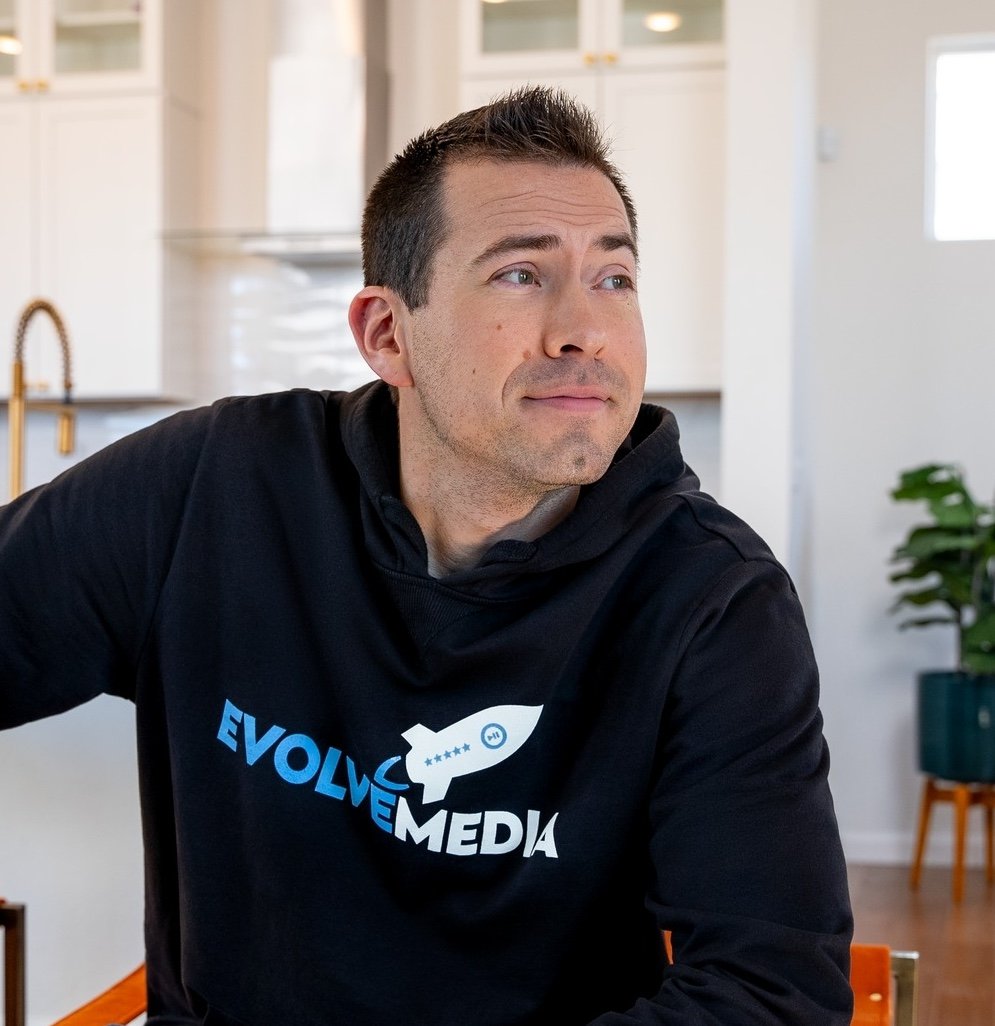
Ian Smith
Founder, Evolve Media Agency
Ian has run Evolve Media Agency since 2017 and has sold on Amazon since 2015. He and Megan run brand management, launches, PPC and in-house photo and video for Amazon, Shopify and TikTok Shop brands, including supplement brands, from Colorado. Questions about this page go straight to him at [email protected].
Common Questions
Does Amazon require third-party testing for all supplements?
Can I send my certificate of analysis straight to Amazon?
Is an FDA inspection enough to prove cGMP compliance on Amazon?
What is the Compliance Fast-Track program for supplements?
Why was my supplement listing deactivated?
Can I sell CBD or peptide supplements on Amazon?
Can Evolve Media fix a flagged supplement listing?
Get a Second Read on Your Listing
Book a free 30-minute call and we will review your supplement listing, images and A+ against Amazon's policy live, then tell you what to fix first.
Rather email? Write Ian at [email protected]. Call or text 719-257-3557. Watch our YouTube channel, grab the free Ecom Profit Box guides, or join the newsletter.
Want Ian to Look at Your Brand?
Tell us what you sell and where you are stuck. Ian replies within one business day, and you get an email right away with a link to book a free 30-minute call.
- Brand management, PPC, listings, launches and content
- Amazon, Shopify and TikTok Shop brands
- A real reply from Ian, not a sales bot
Rather talk now? Call or text 719-257-3557 or pick a time on Calendly.