5 Things Every Amazon Seller Must Do
Before, During, and After Launch
Your product launch success on Amazon is determined by five key factors. Get these right and you build a foundation that compounds month after month. Get them wrong and you’ll burn through budget with nothing to show for it.
Most Amazon sellers approach a product launch the same way — load up inventory, set up a basic listing, turn on PPC, and hope for the best. That approach might have worked in 2019. In 2026, it’s a fast path to burning cash with no organic rank to show for it.
Building a profitable, sustainable Amazon business requires getting five specific things right before, during, and after your launch. These aren’t optional extras — they’re the foundation that determines whether your product gains traction or gets buried on page 10.
In this post we’re breaking down all five in detail — including the content strategy, brand registry steps, PPC approach, and data collection process that consistently produces strong launches. Whether you’re launching your first product or your fiftieth, these fundamentals apply.
🎯 What you’ll learn: The five launch factors that determine Amazon success — from content and brand registry to PPC budget strategy, brand story building, and data-driven optimization.
1. Product Photos and Videos — Your Most Important Launch Asset
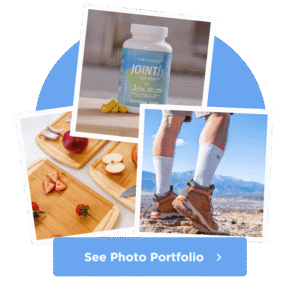
Your product photography and video content is the single most important factor in your launch success. Before a single ad dollar is spent, before your listing copy is written, before your PPC campaigns go live — your visual content determines whether shoppers click, trust, and buy.
Most sellers underinvest here and overspend on PPC to compensate. The math doesn’t work. A higher click-through rate from better main images costs you nothing per click — it’s a permanent improvement that makes every other channel more efficient. Read our full guide on how to build a high-converting Amazon listing from scratch in 2026 for the complete visual content framework.
Main Images — Split Test Before You Scale
Have multiple white background main image variations ready to split test at launch. Don’t guess which one performs best — test them in Manage Your Experiments and let the data tell you. A 1% CTR improvement compounds across every impression your listing receives, forever. See our graphic design service for professionally designed main image variants.
- ✓ Invest in professionally graphic-designed lifestyle and infographic images for your secondary image stack
- ✓ Build your A+ content images at the same time so your listing launches complete, not piecemeal
- ✓ Use your photography brief to also capture angles and contexts that work as ad creative
Videos — The 5-Video Launch Stack
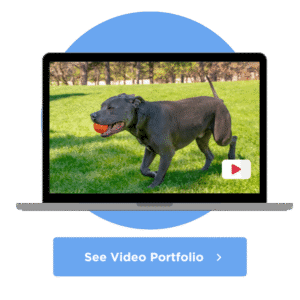
Aim to have at least three to five videos ready before launch. Each video should serve a specific purpose in the buyer’s decision journey — not just be a generic product showcase. Here’s the video stack that consistently drives the strongest launch results:
| Video Type | Purpose | Placement |
|---|---|---|
| Features & Benefits #1 | Showcase core product value clearly | Listing video slot |
| Features & Benefits #2 | Cover secondary benefits and use cases | A+ content module |
| Setup / Tutorial | Reduce returns by showing how it works | Listing + Storefront |
| Why You’re Different | Overcome competitor objections directly | Sponsored Brand video ad |
| UGC Review / Testimonial | Build trust through authentic social proof | Listing + Paid social ads |
✅ Pro tip: Once you have these videos, edit short clips from each and use them in Sponsored Brand video ads and Premium A+ content. One full production day produces content for every placement on and off Amazon.
2. Get Brand Registered — Do This ASAP
Brand Registry is not optional if you’re serious about building an Amazon business that scales. Without it, you’re locked out of the most powerful conversion and marketing tools the platform offers.
What Brand Registry Unlocks
- ✓ A+ Content — the image-rich secondary content section that significantly improves conversion rate
- ✓ Premium A+ Content — video modules, interactive hotspot images, and enhanced comparison charts
- ✓ Brand Story section — builds brand identity directly on your listing and cross-sells your catalog
- ✓ Video uploads — you cannot upload listing videos without Brand Registry
- ✓ Amazon Posts — free organic social-style content that drives traffic to your listing
- ✓ Brand Analytics — search term data, demographic insights, and market basket analysis
- ✓ Manage Your Experiments — A/B testing for main images, titles, and A+ content
- ✓ Sponsored Brand ads — including video ads, the highest-impact paid placement on Amazon
How to Get Brand Registered Fast
File for a trademark
Go to the USPTO website and file a trademark application for your brand name. You don’t need the trademark to be fully approved — you just need it pending.
Get the application number
Once your trademark is filed and pending, you’ll receive a serial number. This is what Amazon needs to verify your application status.
Apply for Brand Registry on Amazon
Go to brandregistry.amazon.com, submit your trademark serial number, and Amazon will verify the pending status and approve your Brand Registry enrollment.
⚡ Don’t wait: Start the trademark process the moment you decide on your brand name. Trademark applications take time — the sooner you file, the sooner you unlock every tool Amazon has to offer. Do this in parallel with your content production, not after.
3. Have a Serious PPC Budget — Expect to Invest Early
Launching on Amazon without a real PPC budget is like trying to drive a car on an empty tank. You need to feed Amazon’s algorithm sales data — and that costs money in the early stages. This is the part most new sellers underestimate, and it’s why so many launches stall after the first few weeks.
Check out our full breakdown on Amazon PPC strategy in 2026 and our ads management service for the complete paid strategy.
The Launch Phase PPC Mindset
- ✓ First 90 days: Expect to lose money on each sale — this is normal and necessary. You’re buying data and rank, not profit.
- ✓ Use coupons and small discounts to increase conversion rate and make it an impulse buy during the launch window
- ✓ Push for maximum sales velocity — every sale during your launch phase drives keyword indexing, organic rank, and review momentum
- ✓ Your first inventory run is not about profit — it’s about positioning for long-term organic growth
- ✓ Track ACoS by keyword — identify which search terms are driving profitable sales and which are burning budget
💡 The compounding truth: Every sale you drive through PPC during launch improves your organic rank for that keyword — which reduces your reliance on paid traffic over time. The short-term PPC investment pays dividends in perpetually lower ACoS as organic rank improves. See our post on 5 things every Amazon seller must do in 2026 for more on the organic rank flywheel.
4. Build Your Brand Story and Content Ecosystem
Amazon is increasingly rewarding brands that look and behave like real brands — not commodity listings with white background photos and five bullet points. Building your full brand content ecosystem is what separates sellers who scale from sellers who stagnate.
The Brand Content Checklist
- ✓ Brand Story section: A cohesive narrative about who you are, why you exist, and what makes you different — displayed across every listing in your catalog
- ✓ Basic A+ Content: Start with 5–10 approved basic A+ modules. You need these approved before you can apply for Premium A+
- ✓ Premium A+ Content: Once approved, upgrade to Premium — video modules, hotspot images, enhanced comparison charts. Premium A+ drives significantly higher conversion rates than basic
- ✓ Brand Storefront: A multi-page storefront with videos, lifestyle imagery, and category navigation — designed for high AOV cross-selling
- ✓ UGC content from micro-influencers: Hire small creators to shoot authentic, relatable content. Use it in your listing, storefront, Premium A+, and Amazon Posts
Drive External Traffic for an Organic Rank Boost
If you can drive traffic from outside platforms — TikTok, YouTube, Instagram, email — directly to your Amazon listing, Amazon rewards you for it. External traffic signals to the algorithm that your product has demand beyond Amazon’s own ecosystem, which translates to ranking boosts and lower effective PPC costs as branded keyword search increases.
This is one of the most powerful and underused levers available to Amazon sellers. Our email marketing service is specifically designed to help Amazon sellers build the owned audience that drives this kind of external traffic on demand — particularly during launch windows where a concentrated traffic spike has the strongest ranking impact.
✅ The external traffic flywheel: Email list → drive traffic to Amazon during launch → spike in sales velocity → organic rank boost → lower PPC costs → higher organic revenue → invest back into content and list growth. See our post on the power of external traffic for attracting visitors to your store for the full breakdown.
5. Collect Data and Feedback — Don’t Guess, Test
The brands that iterate fastest win on Amazon. Data beats gut feeling 100% of the time — and the good news is that you don’t have to wait for Amazon to serve you data. You can accelerate the testing process significantly with the right tools and approach.
Pre-Launch Testing With PickFu
PickFu is a split-testing and consumer polling tool that lets you test your main image, packaging, product title, or A+ content against real respondents before you go live on Amazon. Instead of waiting weeks for Amazon to accumulate click data, you can poll hundreds of people in hours and get directional answers fast.
- ✓ Test multiple main image concepts before choosing which to launch with
- ✓ Test product title variations for appeal and clarity
- ✓ Test packaging and label design against target demographic respondents
- ✓ Use PickFu throughout the product lifecycle — not just pre-launch
The Amazon Vine Program
Vine is Amazon’s official review generation program for Brand Registered sellers. You provide units to Amazon’s Vine Voices — verified reviewers — at no cost, and they provide honest, verified reviews in return. Getting your first 10–30 reviews through Vine early in your launch is one of the fastest ways to build the social proof that drives conversion rate.
⚡ The data mindset: Every decision — main image, title, price point, coupon depth, A+ layout — should have a test behind it. The more feedback loops you can create in the first 90 days, the faster you can find the version of your listing that converts at the highest rate. See our post on 10 conversion rate optimization hacks that capture more customers for practical testing tactics.
Putting It All Together — The Launch Sequence
These five factors don’t operate in isolation. The strongest Amazon launches execute all five in a coordinated sequence — content production, brand registry, PPC investment, brand story, and data collection all running in parallel rather than in sequence.
Start trademark filing + content production simultaneously
Don’t wait for the trademark to file before starting photos and videos. Run them in parallel so you launch with both Brand Registry access and full content ready on day one.
Build your listing copy and A+ content before launch
Use your listing optimization to build keyword-rich copy that works with your visuals. Launch complete, not with placeholder content you’ll improve later.
Set PPC budget and launch campaigns on day one
Have your auto and manual campaigns structured and ready to go live the moment your listing is active. Every day without data is a day you’re falling behind on keyword indexing.
Enroll in Vine and begin collecting reviews
Submit Vine units as early as possible. Reviews compound — the earlier they start coming in, the stronger your conversion rate during the critical first 90 days.
Run PickFu tests and iterate based on data
Start testing main image variations as soon as you have traffic data. Use Manage Your Experiments for listing elements and PickFu for rapid directional answers between test cycles.
📚 Related Reading
- → How to Build a High-Converting Amazon Listing From Scratch in 2026
- → Amazon PPC Strategy Guide 2026: How to Launch, Optimize & Scale
- → 5 Things Every Amazon Seller Must Do in 2026
- → 10 Conversion Rate Optimization Hacks That Capture More Customers
- → 5 Marketing Strategies That Increase Revenue AND Net Profit
- → Is Launching a New Product on Amazon Still Worth It in 2026?
- → The Power of External Traffic: Attracting Visitors to Your Store
Want Help Creating High-Converting Content for Your Launch?
Book a free Amazon listing audit with Ian — get actionable steps to increase your CTR and conversion rate, plus our free Amazon listing checklist, organic ranking roadmap, and product launch guide.
Book a Free Amazon Listing Audit