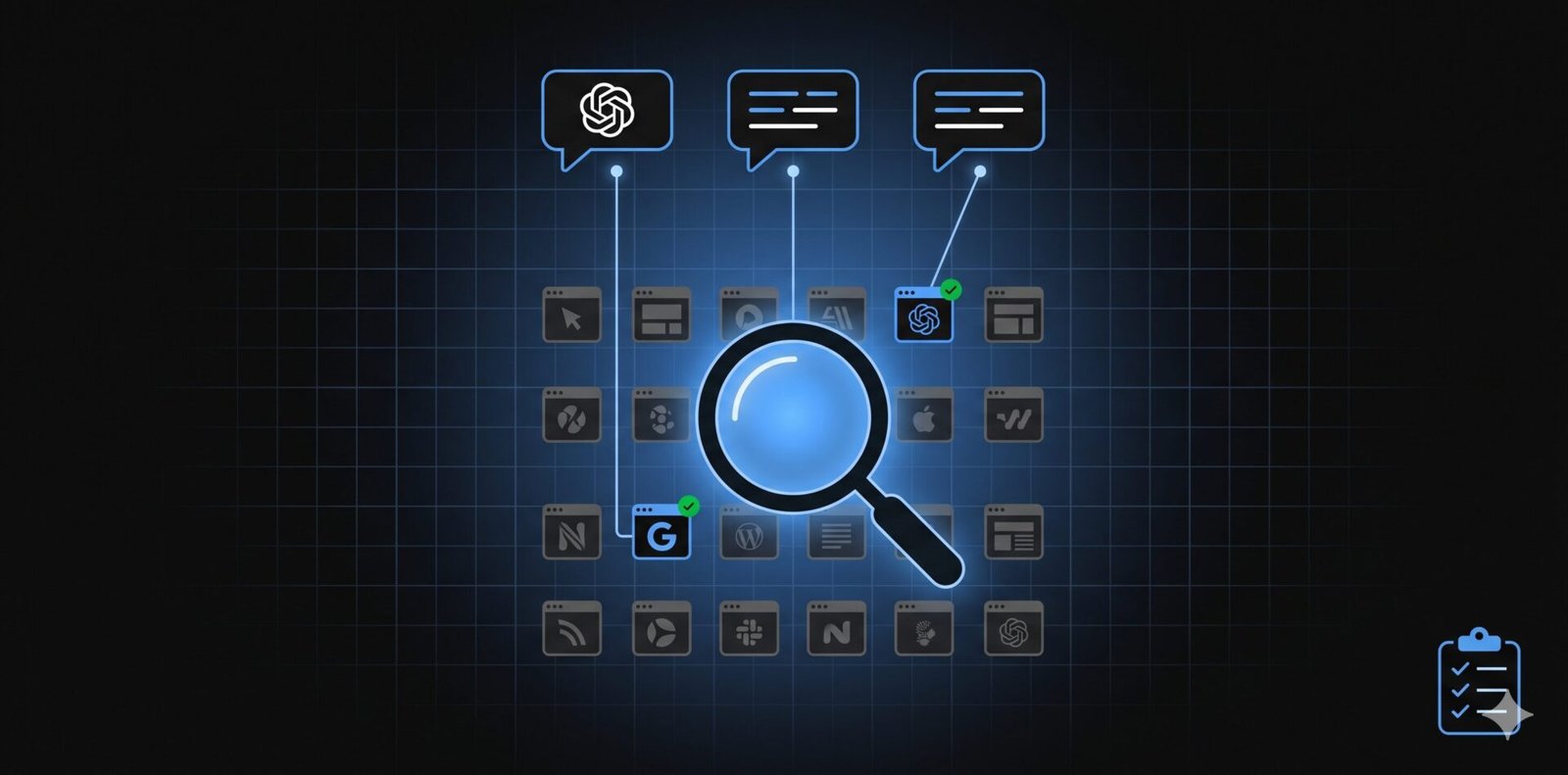

Most Shopify brands are spending thousands on Google Ads while their customers have already moved their product research to ChatGPT. The brands winning in 2026 aren't just optimizing for search engines — they're showing up in AI conversations before the click ever happens.
AI-referred shopping traffic is the fastest-growing acquisition channel in ecommerce right now. Traffic from generative AI to retail sites surged 693% year-over-year during the 2025 holiday season, according to Adobe Analytics. And it's not just traffic — AI-referred shoppers convert 31% higher and are 33% less likely to bounce than visitors from other channels. When an AI chatbot recommends your product, the customer arrives with their mind nearly made up.
The problem: most Shopify brands aren't showing up at all. Only 11% of domains get cited by both ChatGPT and Perplexity, and 64% of Shopify DTC brands have at least one material factual error in how AI describes them — costing sales from traffic they never even knew they lost. This guide fixes that. Here are the 10 strategies that determine whether your Shopify store gets recommended or skipped — if you are new to the topic, start with our primer on what AI search optimization actually is.
Enable Shopify Catalog and Agentic Storefronts
This is the table-stakes move most Shopify brands still haven't taken. Shopify Catalog automatically syndicates your product data to ChatGPT's shopping interface — your products become discoverable without any setup. But "discoverable" and "recommended" are different things. Agentic Storefronts take it further: they enable in-chat checkout so customers can buy directly inside ChatGPT or Google AI Mode without leaving the conversation.
To check and enable these integrations, go to Settings → Sales Channels in your Shopify admin. You'll see toggles for ChatGPT, Google AI Mode, Microsoft Copilot, and Perplexity (early access). Turn them all on. For Perplexity specifically, also apply directly at the Perplexity Merchant Program (free) — direct merchant enrollment dramatically improves how accurately your products appear in Perplexity results compared to relying on web indexing alone.
Walmart reported approximately 36% of its referral traffic coming from ChatGPT in early 2026 after enabling open AI channel integrations. Amazon blocked these same crawlers to keep shopping inside its ecosystem (one more reason brands are migrating from Amazon to Shopify) — giving your Shopify store a structural advantage right now that won't last forever. — Ecommerce Fastlane / Tinuiti Q1 2026
Also enable: Google Merchant Center
Install the Google & YouTube App in your Shopify admin and connect to Google Merchant Center. Google AI Mode's shopping panels are powered by Merchant Center data — if your feed isn't connected and approved, you don't exist in Google AI shopping recommendations. Fix any feed disapprovals in your Merchant Center dashboard; every disapproval is a product missing from AI recommendations.
Fix Your Product Data Quality — The Real Ranking Factor
Product data quality is the single most controllable factor for AI shopping recommendations. When someone asks ChatGPT "What's the best compact stroller under $300 for travel?" — the AI is scanning product data fields to build its answer. If your title says "Blue Stroller" and your description is 40 words of generic copy, you won't be recommended. The competitor with a 200-word description, GTINs, all dimension fields filled, and 12 images will be.
The complete product data checklist
- Title format: Brand + Model + Key Attribute + Size/Color (e.g., "Babyzen YOYO+ Compact Travel Stroller — 6+ Months — White/Silver Frame")
- Description: 150–300 words minimum, written for natural language queries, not just keywords. Include use cases, specific measurements, what's in the box.
- GTINs / MPNs: Global Trade Item Numbers or Manufacturer Part Numbers wherever you have them. Non-negotiable for Merchant Center.
- Google Product Category: Use the full taxonomy string (e.g., "Baby & Toddler → Strollers"). Incomplete categories get deprioritized.
- Custom metafields: Material, dimensions, weight, country of origin, age range, compatibility. Every attribute a customer might filter by in an AI chat.
- High-quality images: 8+ images minimum. White background primary, lifestyle shots secondary. AI vision parsing now uses these.
- Accurate pricing and availability: Mismatched data (AI says $49, site says $79) causes bounce. Sync errors destroy conversion rates.
64% of Shopify DTC brands have at least one material factual error in what AI says about them — wrong price, wrong specs, wrong product positioning. AI-referred traffic only converts if AI describes your product accurately. Stores where AI gets details wrong see high bounce rates even from otherwise high-intent visitors. — Metricus, April 2026
Open Your Site to AI Crawlers — Don't Block the Bots That Recommend You
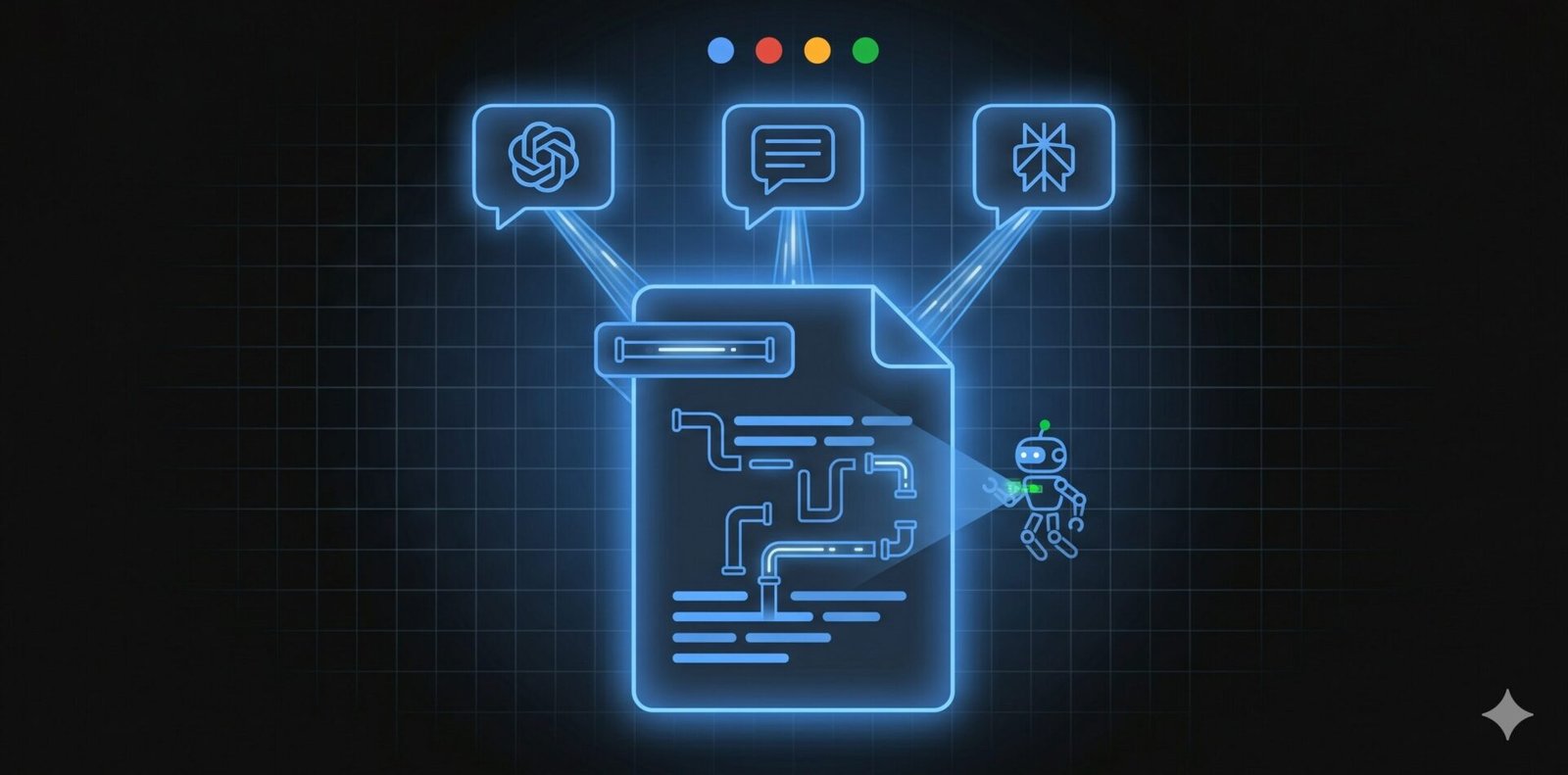
This is the most common invisible mistake killing Shopify AI visibility. Security plugins, Cloudflare Bot Fight Mode, and default robots.txt configurations block AI crawlers as a side effect of blocking malicious bots. If an AI crawler can't read your site, it cannot recommend your products — period.
Go to yourdomain.com/robots.txt right now and check for any Disallow rules affecting these agents:
- OAI-SearchBot — OpenAI's live web retrieval crawler. Blocking this kills ChatGPT web citations.
- ChatGPT-User — ChatGPT's browsing agent. Block this and ChatGPT can't visit your pages.
- PerplexityBot — Perplexity's crawler. Block this and you won't appear in Perplexity results.
- ClaudeBot / Anthropic-AI — Claude's crawlers.
- Google-Extended — Google's AI content crawler for Gemini and AI Overviews.
GPTBot (OpenAI's training crawler) is separate from OAI-SearchBot. Blocking GPTBot stops your content from being used in model training but does NOT prevent ChatGPT from recommending your products via web search. You can block GPTBot if you want to protect training use while still allowing live citations — just don't block OAI-SearchBot.
Also check your Cloudflare or security settings for IP-level bot blocking that may be catching AI crawlers before they even hit your robots.txt. Submit your sitemap to Bing Webmaster Tools — ChatGPT's web search runs on Bing's index, and most Shopify stores have never set this up.
The Ecom Profit Box
Listing checklist, image blueprint, email strategy, and 4 more playbooks — completely free.
Get it free →Get Your AI Visibility Audit
We'll identify exactly why AI isn't recommending your Shopify store and give you the fix list.
Book now →Implement the Full Schema Stack — The Language AI Speaks
Schema markup is structured data that tells AI systems exactly what your content and products are. Shopify's default themes generate basic Product schema, but they consistently miss the fields that matter most for AI citations. Getting schema right is a multiplier — it makes everything else you do more visible to AI.
The Shopify AI schema stack
- Product schema — with
offers(price, availability, currency),aggregateRating(star rating + review count),brand,description,imagearray. Shopify's native schema often omits aggregateRating — add it via a schema app or custom JSON-LD. - Organization schema — on your homepage: brand name, URL, logo, founding year, sameAs social profiles, contact info. This builds your brand entity that AI recognizes.
- FAQPage schema — on any page with a Q&A section. This is the highest-density citation format AI uses. Pages with FAQPage schema are cited 2.8× more often by AI systems.
- Article schema — on every blog post and buying guide, with named author and dateModified. Author attribution alone is a 3× citation multiplier.
- BreadcrumbList schema — on all pages. Helps AI understand your site hierarchy.
Run every page through Google's Rich Results Test (free) after adding schema. Missing required fields and conflicting schema from multiple apps are the two most common errors — fix both before moving on.
For Shopify specifically: many schema apps conflict with each other or with the theme's default JSON-LD. Audit your page source before adding new schema to avoid duplicate or broken markup. The AI Visibility Audit guide walks through the exact schema audit process.
Build Topical Buying Guide Content That Answers AI Queries
AI shopping platforms don't just recommend products — they answer questions. "What's the best protein powder for building muscle on a budget?" is a conversational query that pulls from buying guides and comparison content, not just product pages. Brands that publish topical guides in their category become the authority AI reaches for when answering these queries.
The content types that get cited most
- Buying guides — "How to Choose the Best [Product Category]" with specific criteria, comparison tables, and named recommendations. These directly answer the research questions AI shopping assistants receive.
- Comparison content — "[Your Brand] vs [Competitor]" and "[Product A] vs [Product B]" articles. Perplexity users visit 13 pages on average per session — they're researching, and comparison content is where that happens.
- Use-case content — "Best [product] for [specific person/situation]" pages. "Best trail running shoes for flat feet" is the format AI uses for personalized recommendations.
- FAQ-led collection pages — Add a detailed FAQ section to every major collection page. FAQPage schema on these pages captures conversational queries that land on your collection, not just individual products.
Google AI Mode uses "query fan-out" — it issues multiple background searches to build its answer. A strong buying guide on your site can earn AI citations even if your product page doesn't rank on page one of traditional search. Content depth and topical authority are the levers here. For more on this strategy, see our AI Search Visibility Playbook.
Dominate Review Platforms — The 3× Citation Multiplier
Brands active on 3+ review platforms are cited 3× more often by ChatGPT than brands with a single or no review presence. AI systems treat review platform presence as a legitimacy signal — it means real customers, verified purchases, and an active business. For Shopify brands, this is one of the highest-leverage investments you can make relative to the effort.
The review platforms that move the needle for Shopify
- Google Reviews (via Google Business Profile) — Universal priority for every Shopify brand, especially if you also have local presence. Target 50+ reviews for a strong signal.
- Trustpilot — Especially important for DTC and subscription brands. Trustpilot profiles are heavily indexed by AI systems and appear in countless "brand review" queries.
- Shopify Product Reviews (with structured data) — Ensure your on-site reviews are marked up with
aggregateRatingin your Product schema. Star ratings in AI responses are powered by this markup. - Amazon reviews (if dual-channel) — If you sell on both Shopify and Amazon, your Amazon review count and rating directly influences how AI recommends your brand for product-type queries.
- Category-specific platforms — Beauty brands: Beautylish, Cult Beauty. Home goods: Houzz. Tech: CNET, Wirecutter mentions. Find the 1–2 platforms your category uses.
Set up a post-purchase review request email sequence via Klaviyo or your ESP. Timing matters: ask 7–14 days after delivery, include a direct link to your review platform, and prompt specifics — "mention what you bought and how you're using it." Detailed reviews become AI citation fuel. Generic 5-star reviews are noise.
Build a Reddit and Community Presence — Where AI Does Its Research
Reddit is disproportionately cited in AI product recommendations because it represents unbiased third-party opinion at scale. When someone asks ChatGPT "what do real people think of [brand]?" — Reddit threads are often where the answer comes from. For Shopify brands, authentic community presence is one of the most durable AI recommendation signals you can build.
How to build Reddit presence without getting banned
- Identify 3–5 relevant subreddits for your product category. r/frugalmalefashion, r/homebrewing, r/running, r/MealPrepSunday — whatever your niche. Spend 2 weeks reading before posting anything.
- Contribute genuinely first. Answer questions in your area of expertise without mentioning your brand for the first 10–15 posts. Build karma and credibility.
- When relevant, mention your product honestly. "I actually built a product for exactly this problem — [brand]. Happy to answer questions." This is fine. Obvious promotional posts get flagged immediately.
- Create a brand AMA (Ask Me Anything). Founders doing AMAs in relevant subreddits generate enormous authentic mention volume that AI indexes heavily.
- Watch for brand mentions and respond. When someone mentions your brand (positively or critically), a thoughtful response from the founder creates a positive signal thread AI can cite.
Also consider Quora, niche forums in your category, and Facebook Groups. The pattern is the same: authentic value first, product mentions sparingly and honestly. AI rewards genuine community presence because it's hard to fake at scale.
For local businesses, the Local Business AI Search guide covers the community-specific strategy for service businesses.
Ready to Get Recommended by AI?
We build the full AI visibility stack for Shopify brands — schema, content, PR, reviews. Book a free 30-min call.
Book free call →The AI Visibility Audit
7-layer diagnostic framework for finding exactly why AI isn't recommending your brand.
Read the guide →Get Into "Best Of" Listicles — The #1 Source of AI Product Citations
43.8% of ChatGPT citations come from "best of" listicle pages, according to Ahrefs analysis. When someone asks ChatGPT "what are the best eco-friendly water bottles?" — it's pulling from compiled comparison articles, not scraping product pages. Getting your Shopify brand listed in these articles is one of the highest-ROI investments for AI recommendation visibility.
How to get into the listicles that matter
- Find the pages that are already being cited. Search Google for "best [your product category]" and identify the top 5–10 results. These are the listicle pages AI is pulling from for your niche. Being listed in these pages is the target.
- Pitch free product samples. Most small-to-medium "best of" content creators will update their lists for a sample. Find the author's contact (often on the About page or LinkedIn) and offer to send the product with no strings attached.
- HARO and Qwoted responses. Journalists writing "best of" roundups often source via HARO (Help A Reporter Out) or Qwoted. Sign up and respond to relevant product category requests within the first hour — early responses get vastly higher pick rates.
- Paid placements — selectively. Some listicle sites offer paid inclusion. This is legitimate as long as it's disclosed. The citation value comes from the page being indexed and cited by AI, not whether the inclusion was paid.
- Target review and comparison sites. Wirecutter, Good Housekeeping, Popular Mechanics, and category-specific review sites (OutdoorGearLab, PCMag, etc.) carry enormous AI citation weight. These take longer but are worth pursuing through PR agencies or direct founder outreach.
See the full digital PR playbook in our Brand Mention Strategy for AI Search guide.
Add llms.txt to Your Shopify Store — The Emerging AI Standard
llms.txt is a new file format (analogous to robots.txt, but for AI systems) that tells AI platforms exactly what your brand is, what you sell, and which pages represent your most important content. It's the difference between an AI system guessing about your brand from fragmented web signals and having a clear, structured declaration from you directly.
What an ecommerce llms.txt file looks like
- Brand summary — who you are, what you sell, your founding year, and the specific customer you serve. 2–3 sentences, written for an AI to quote directly.
- Key pages list — your homepage, top collection pages, best-selling product pages, and buying guides. AI platforms prioritize listed pages when building recommendations.
- Product descriptions — clean, accurate, quote-ready descriptions of your top 5–10 products. Corrects any factual errors in AI training data about your products.
- Brand differentiators — what makes you different from competitors, in a form AI can extract and quote in a recommendation ("X is the only brand that...").
For Shopify stores, the llms.txt file lives at yourdomain.com/llms.txt. Create it as a static file and add it via your Shopify theme's assets folder, or add it as a page with a URL redirect. The full implementation guide, including a copy-paste Shopify template, is in our llms.txt for Ecommerce guide.
Over 10,000 domains have implemented llms.txt since its proposal in 2024, but adoption among Shopify merchants is still extremely low. The brands that implement it now establish a clear, authoritative presence in AI systems before competitors do. Implementation takes under 30 minutes for a basic version.
Measure Your AI Citation Share — You Can't Improve What You Don't Track
AI recommendation visibility doesn't show up in Google Analytics or Search Console. It's an entirely separate measurement layer that most Shopify brands have never set up. Without tracking, you're blind to whether your investments are working — and you can't catch factual errors before they cost you sales.
How to measure AI recommendation visibility
- Manual prompt testing (free, monthly). Run 20–30 queries in ChatGPT, Perplexity, and Google AI Mode covering your product category, brand name, and competitor comparison queries. Document whether you appear, what's said, and whether it's accurate.
- Share of Model calculation. Divide the number of AI responses mentioning your brand by total responses tested. Track this monthly. A 15–20% SOM in your category is strong; under 5% means significant gaps exist.
- AI referral tracking in GA4. Set up a custom channel group for AI referral traffic: source contains chatgpt.com, perplexity.ai, or gemini.google.com. This captures the clicks AI does send — even if it undercounts dark funnel influence.
- Accuracy auditing. When AI does mention you, confirm the details are correct — price, product specs, availability, positioning. Incorrect AI descriptions are often traced to outdated third-party reviews or stale product data in Merchant Center.
- Automated tools (paid). Otterly.ai, Profound, and Peec AI run continuous prompt testing across AI platforms and alert you to citation changes. For Shopify brands doing $100k+/month, this monitoring overhead is worth the investment.
Run your prompt test monthly. According to Q1 2026 citation trend data, AI citation patterns shift meaningfully month-over-month — quarterly reviews miss too much. For brands doing $100k+ per month, weekly monitoring via an automated tool is the right investment. For everyone else, a consistent monthly manual test is the floor.
For the complete measurement framework, see the AI Visibility Audit guide — it includes the full 30-query prompt test template, the Share of Model calculation, and a competitor gap analysis framework.