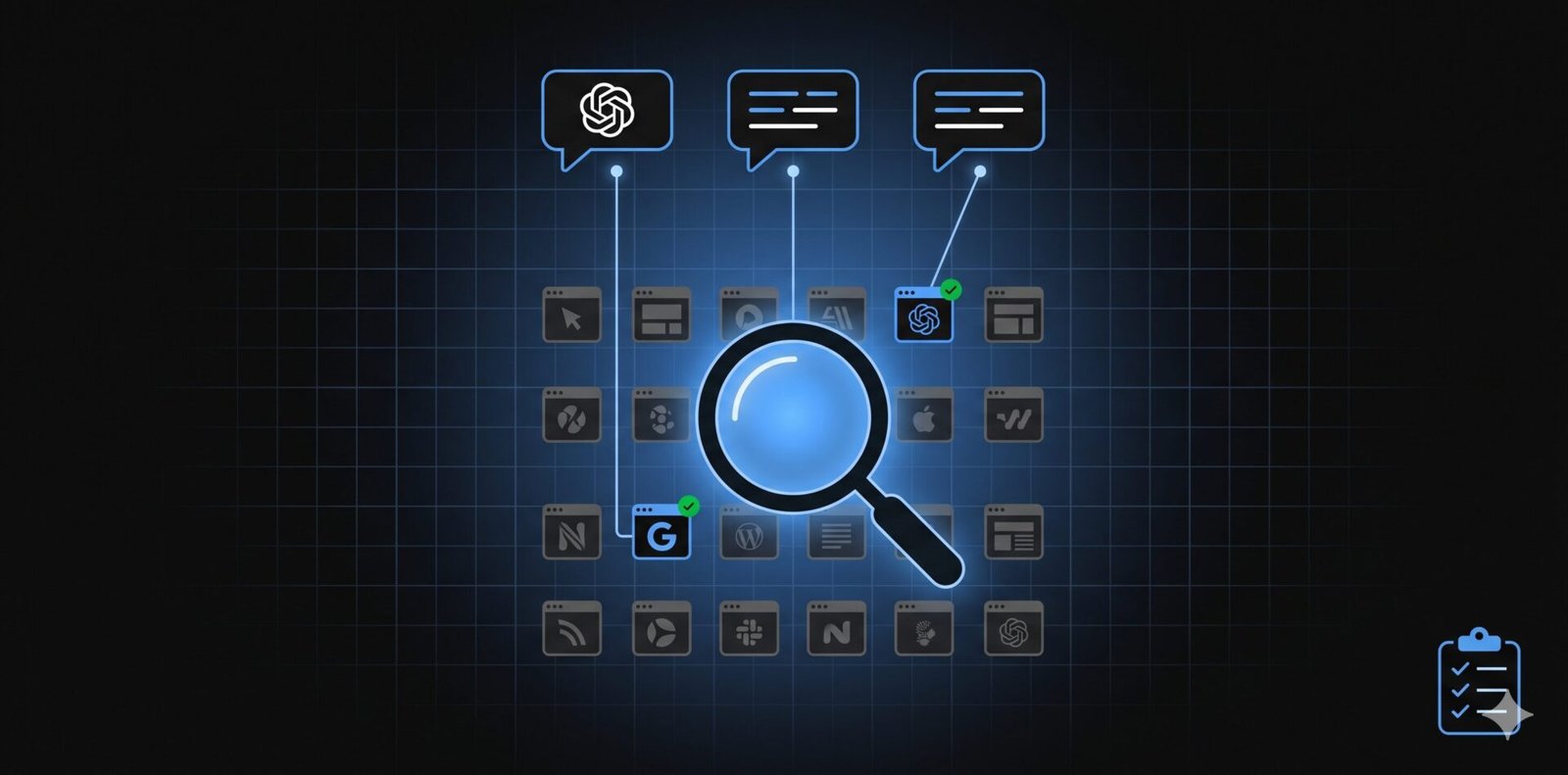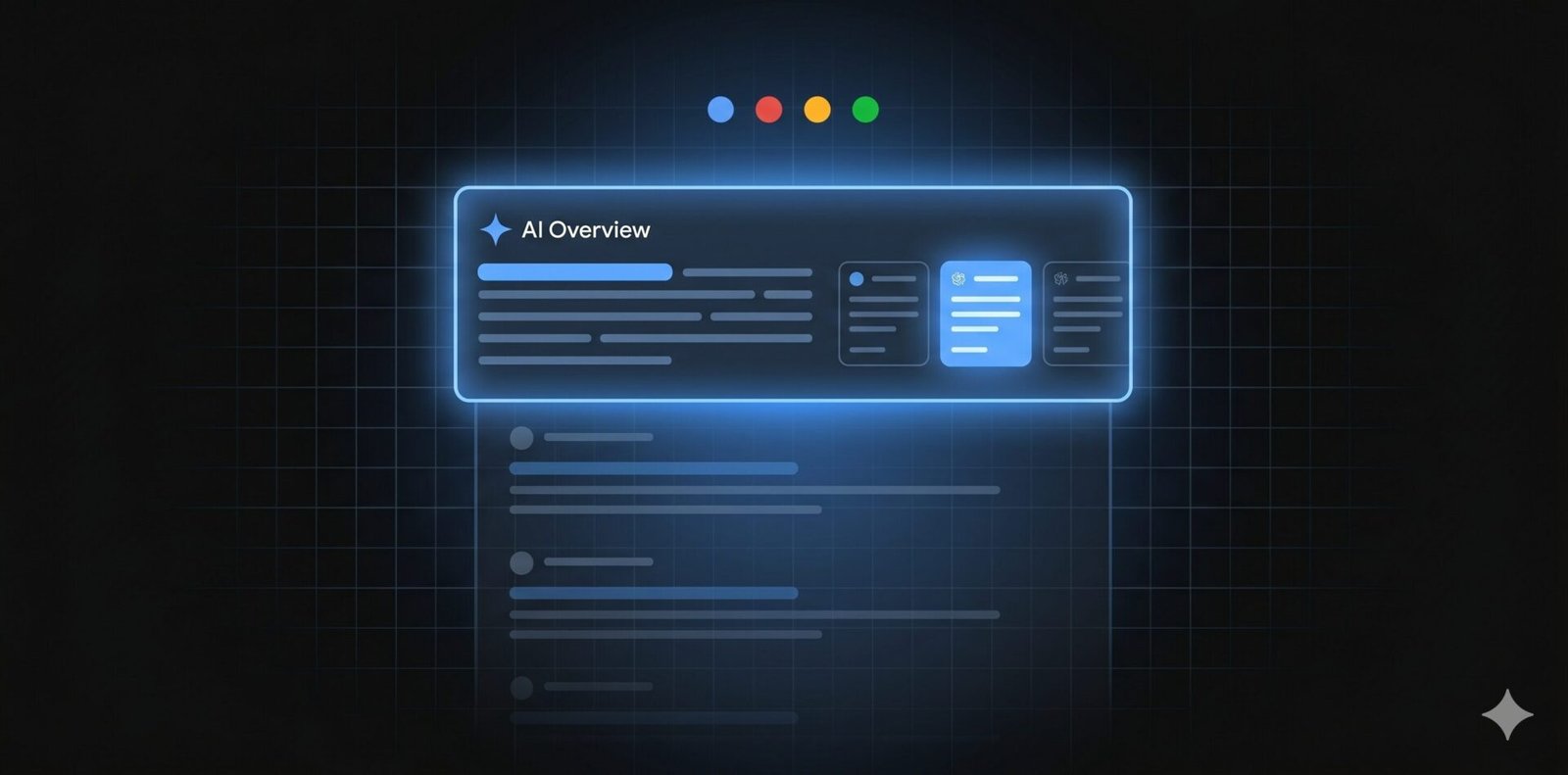
Your own website can't corroborate itself. That's the single insight every ecommerce brand needs to understand about AI search in 2026 — because it determines whether ChatGPT, Claude, Perplexity, and Google AI Overviews will ever recommend you to a customer.
AI systems evaluate brands the way a careful journalist would. They cross-reference multiple independent sources before committing to a recommendation. If your brand is only mentioned on your own site, AI treats you as a claim in search of evidence. If your brand shows up across podcasts, listicles, Reddit threads, industry publications, Wikipedia, and YouTube, AI treats you as a verified entity worth surfacing.
This guide is the execution playbook for building that mention footprint — the "Authoritativeness" layer from our E-E-A-T for Ecommerce framework, broken into four pillars and 14 sections of specific tactics. If you've already run our AI Visibility Audit and found third-party mention gaps, start here. If you're earlier in the journey, start with our AI Search Visibility Playbook for the broader framework. The full topic map for this work lives in our AI Search Hub.
Why Brand Mentions Beat Backlinks in the AI Era
Traditional SEO was a backlink economy. Every link was a vote, every vote passed authority, and the site with the most votes from the most authoritative voters won the SERP. That logic still works for Google — mostly — but it doesn't translate to AI search.
AI systems don't follow links. They parse text. When ChatGPT processes a page mentioning "Evolve Media Agency" near phrases like "Amazon agency," "ecommerce optimization," and "AI visibility," the co-occurrence itself is the signal. Whether that mention is hyperlinked or not barely matters. What matters is whether your brand name shows up in authoritative contexts, repeatedly, across independent sources. (For the underlying vocabulary — entities, co-occurrence, and Share of Model — see our comprehensive AI search glossary.)
Unlinked brand mentions carry similar weight to linked citations for AI visibility. Traditional SEO optimized for domain authority. AI search optimizes for brand-name authority across the open web. That's why a podcast interview where the host says your brand name is worth more than a footer link on a DA 40 site.
The practical implication: stop thinking "backlinks." Start thinking "mentions." Every podcast, press feature, listicle inclusion, Reddit thread, YouTube review, and industry award is a mention. Mentions compound. Mentions corroborate. Mentions are what AI systems count when deciding whether to recommend you.
The Consensus Signal: How AI Builds Confidence from Multiple Sources
When an AI generates an answer, it's running a quiet vote. It retrieves dozens of pages relevant to the query, weighs the credibility of each source, and looks for claims that multiple independent sources agree on. Claims with consensus get cited. Claims that only appear on one source — especially a source with commercial interest in the claim — often get dropped.
Your brand is a claim. "Brand X is a reliable Amazon agency" is a claim. If that claim only appears on your own website, it's weak. If that claim appears on your website, a BuzzFeed listicle, an Ecommerce Operators podcast transcript, a Reddit thread, a Capterra review summary, and a Wikipedia entry, it's overwhelming. AI has consensus.
The top 50 brands in any given ecommerce category receive about 28.9% of all mentions in Google AI Overviews. These aren't necessarily the biggest brands — they're the brands with the most diversified mention footprint. That's why a mid-sized agency with active podcast presence and strong Reddit visibility can out-cite a larger competitor with only on-page content.
This is also why paid placements perform poorly for AI visibility. Paid content has commercial interest embedded in the source. It's the opposite of independent corroboration. Edelman found 90% of AI citations driving brand visibility come from earned and owned media, not paid placements. Budget spent on sponsored posts rarely translates into AI citations.
The 4 Brand Mention Pillars
Not all mentions are equal, and not all source types carry the same weight. After analyzing mention patterns across hundreds of ecommerce brands, we've mapped every AI-relevant mention into four distinct pillars. A strong AI visibility profile requires presence in all four — not just the one you're most comfortable with.
Mentions in journalism, industry publications, and editorial content. This is the traditional PR pillar — reporters writing about your brand, industry analysts including you in reports, guest articles you contribute to respected sites. Earned media signals that real journalists vetted your brand and chose to mention it.
- Industry publication coverage (Modern Retail, Digiday, Retail Dive, eMarketer)
- Local business press (chamber coverage, regional business journals)
- Trade pub features for your specific category
- Guest articles you author on authoritative sites
- "Best of" listicles where editors choose the brands (not pay-to-play)
Organic user discussions where real people recommend or discuss your brand. Perplexity in particular cites Reddit at 6.6% of its top sources — the single highest source-type concentration on any AI platform. Google AI Overviews also lean heavily on Reddit. Community presence is the fastest path to AI citation for most brands.
- Reddit subreddits in your category (r/AmazonSeller, r/Ecommerce, r/Shopify)
- Quora answers where you or customers mention your brand
- Industry-specific forums (DigitalPoint, WebmasterWorld, Warrior Forum)
- Discord and Slack communities for your category
- Facebook Groups where your brand comes up organically
Machine-readable entity records that AI systems use to verify you exist and to map you to topics. Structured mentions are the lowest-effort, highest-ROI pillar because they're one-time setups that keep paying dividends. Wikipedia in particular accounts for 47.9% of ChatGPT's top 10 source citations.
- Wikipedia article (when notability allows)
- Wikidata entity entry (much easier to qualify for)
- Crunchbase, LinkedIn Company, and industry databases
- Review platforms (Trustpilot, G2, Capterra, Yelp)
- Industry directories specific to your category
Mentions in video content and podcast transcripts. YouTube is now the #1 cited social platform in Google AI Overviews. Podcast transcripts are heavily crawled by all major AI systems. Creator mentions carry dual weight — they corroborate your expertise and they signal ongoing activity, which AI systems read as freshness.
- Podcast guest appearances (transcripts are AI gold)
- YouTube channel reviews and mentions
- TikTok creator content featuring your brand
- Your own video channel with category-relevant content
- Conference talks and webinar appearances
Auditing Your Current Mention Footprint
Before building new mentions, map what you already have. Most brands discover they have 30-50% more existing mentions than they realized — unlinked references on industry blogs, forgotten podcast appearances, customer reviews that mention specific product features. Surface those first, then identify pillar gaps.
The 30-Minute Mention Audit
- Run Brand Searches Across Key PlatformsSearch your brand name with quotes ("Evolve Media Agency") on Google, Bing, Reddit, Twitter/X, LinkedIn, YouTube, and Google News. Document every mention, linked or not. Use BrandMentions or Ahrefs Brand Monitoring to automate this.
- Categorize Every Mention Into a PillarBuild a spreadsheet with columns: URL, source type, pillar (Earned/Community/Structured/Video), date, sentiment, linked yes/no. This immediately surfaces your strongest and weakest pillars.
- Identify Your Mention GapsIf you have 20 earned media mentions but 0 structured entries or Reddit presence, your authority profile is lopsided. AI systems want diversity. Aim for at least 5-10 mentions per pillar before optimizing any single pillar further.
- Find Unlinked Mentions to ConvertMany existing brand mentions on industry blogs aren't hyperlinked. Reach out to the author with a short, friendly email offering the correct URL. Conversion rate is often 40-60%, and each converted link is near-zero-effort authority building.
- Benchmark Against 3 CompetitorsRun the same audit for your top 3 competitors. Where do they have mentions you don't? Those source types and platforms are your specific outreach targets — proven willingness to cover your category.
Set up a Google Alert for your brand name and Talkwalker Alerts (the free replacement for the deprecated Mention.net alerts). Get a daily email of every new mention across the web. This one habit will surface 80% of your ongoing mention opportunities.
"Best Of" Listicle Outreach (The Highest-ROI AI Citation Source)
Listicles are the single highest-value content type for AI citations. 43.8% of ChatGPT citations come from "best of" pages, and both Google AI Overviews and Perplexity heavily cite category roundups. A single listicle inclusion on a mid-authority site can drive more AI visibility than a month of blog posting on your own domain.
How to Find the Listicles to Target
- Search Google for "best [your category]" and "top [your category]" — look at every result on page 1 and 2. Any listicle that doesn't include you is a target.
- Add qualifiers: "best [category] for [use case]," "top [category] 2026," "[category] alternatives to [big brand]," "[category] for small business."
- Use Ahrefs to find who ranks for "best [competitor]" — those same authors often write broader category roundups.
The Outreach Framework
Most brands pitch listicle inclusion wrong. They make the pitch about themselves ("we should be on your list"). The right pitch makes the case about the reader's experience. Here's the framework:
Listicles aren't lists of the best brands. They're lists of brands the author could confidently recommend. Your job in outreach is making their recommendation feel safe.
Successful pitches include: a specific differentiator vs. the brands already listed, a customer result with real numbers, and a clear "why readers benefit from knowing about us." Avoid generic "please consider adding us" messages. Avoid payment offers (these get listicles de-listed from AI corpora entirely).
Need Help Building Your Mention Footprint?
We run digital PR, podcast guesting, and listicle outreach campaigns for ecommerce brands. Book a call and we'll build your 90-day mention roadmap.
Book a Free CallEcom Profit Box
7 proprietary playbooks — listing checklist, image blueprint, email flows, and more.
Get Free ResourcesDigital PR and Press Mention Strategy
Traditional PR built for print magazines is dead. Digital PR built for AI citations is what replaces it. The targets are the same — journalists, industry publications, trade media — but the measurement shifts from "Did we get coverage?" to "Did AI pick up the mention in its corpus?"
The Digital PR Playbook for Ecom Brands
- Founder-led narratives — Your founder's story is pitchable. "Built 3 companies, now helping Amazon brands with AI search" is a story. Local business journals and industry trade pubs cover founder stories regularly.
- Proprietary data studies — Publish one original data study per quarter. "We analyzed 500 Amazon listings and found X" generates immediate press interest. Data becomes citation fuel for years.
- Trendjacking current events — When Amazon makes a policy change, when AI search hits a milestone, when a major platform shifts — be the expert quoted. Journalists need sources quickly.
- Local business angles — Your local chamber, city business journal, and regional trade pubs are underutilized. Easier to break into than national press, and the mentions still build AI authority.
- Case studies as stories — Turn client results into narratives. "How [Client] went from $200K to $2M on Amazon in 18 months" is a pitchable story, not just a case study.
Podcast Guesting as a GEO Weapon
Podcast transcripts are the most underrated mention source in the entire AI ecosystem. They're long-form (lots of co-occurrence signal), authoritative (host vouching for you), and increasingly transcribed and indexed by AI systems. One strong podcast appearance can drive more AI citations than dozens of guest blog posts.
Finding the Right Podcasts
- Listen Notes — Search by topic, filter by audience size. Aim for 5,000-50,000 monthly downloads in your category.
- Podchaser — Better for finding category-specific shows with engaged audiences.
- Apollo.io / Hunter.io — Find host contact information for direct outreach.
- Listen to shows you already know — The best pitches come from people who've actually heard the show and can reference specific episodes.
The Pitch That Gets You Booked
Most podcast pitches fail because they're about the guest. Successful pitches are about the listener. Include: three specific topics you could cover (not generic "ecommerce strategy"), one unique data point or counterintuitive insight, a link to your best previous podcast appearance or keynote as social proof.
For ecommerce founders, 2-4 podcast guest appearances per quarter is a strong baseline. Each one generates a transcript AI can crawl for years. Compounding effect is dramatic — by month 12, you have 8-16 separate authoritative sources corroborating your expertise.
HARO, Qwoted & Journalist Request Platforms
HARO (now part of Cision), Qwoted, Help A B2B Writer, and Featured.com connect journalists writing articles to expert sources. Journalists post what they need, you respond with a relevant quote and credential, and if chosen, you get quoted in the published article. It's the fastest path to earned media mentions for most ecommerce founders.
The HARO-Style Response That Gets Quoted
- Respond fast — journalists work on tight deadlines. First 10 responses usually win.
- Lead with your credential — one sentence on who you are and why you're qualified to answer this specific question.
- Answer the exact question — don't pitch your product, answer what they asked.
- Provide a quotable, self-contained insight — 2-4 sentences that could be lifted straight into an article without editing.
- Include a specific data point or example — "We've seen this pattern across 40 client accounts" beats generic opinions.
- Keep it under 200 words total — journalists skim.
Volume and Consistency
A realistic cadence for an active ecommerce founder: scan incoming requests 2-3x per week, respond to 5-10 relevant requests weekly. Expect 10-15% of responses to result in quotes. That's 1-2 earned media mentions per week — 50+ per year from this single channel.
Guest Articles on Industry Publications
Guest posting died as an SEO tactic years ago. Guest articles on respected industry publications are thriving as an AI citation tactic. The distinction matters: ecommerce-focused publications accepting genuine expert contributions (not link-building schemes) are gold for brand mention building.
Targets Worth Pitching (Ecom Ecosystem)
- Search Engine Journal, Search Engine Land, Moz Blog
- Modern Retail, Digiday, Retail Dive, eMarketer
- Helium 10 blog, Jungle Scout blog, SellerApp blog
- Shopify Blog partner network, BigCommerce blog
- Klaviyo blog, Attentive blog, Omnisend blog (for email-focused content)
- Category-specific publications (beauty, home goods, supplements, etc.)
The Pitch Framework
Successful guest article pitches: specific headline suggestion, 3-5 bullet point outline, explanation of why this angle isn't already covered on the target site, brief author bio with credibility signals. Avoid sending full drafts upfront — most editors prefer to shape the angle first.
Pair guest articles with internal linking back to your foundational guides like our AI Search Visibility Playbook and Amazon PPC Strategy Guide. These links drive referral traffic, but the mention itself is what builds AI authority.
Reddit and Quora: The Community Mention Strategy
Community platforms are where AI systems find the most trusted mentions — the ones made by real users, not brands. Reddit in particular punches far above its weight in AI citations: it's 6.6% of Perplexity's top 10 sources and a top-5 source on every major AI platform.
The Reddit Ecommerce Mention Strategy
- Build genuine account history first — Reddit users and moderators detect promotional accounts instantly. Spend 2-3 months contributing useful content before ever mentioning your brand.
- Participate in the right subreddits — r/AmazonSeller, r/FulfillmentByAmazon, r/Ecommerce, r/Shopify, r/TikTokshop, r/smallbusiness, r/DigitalMarketing.
- Answer questions with depth — 300-500 word thoughtful responses build upvote karma and credibility. Then, in the natural course of answering, you can reference your own experience and brand.
- Get mentioned by others — the best Reddit mentions are customers tagging your brand in a response. Build actual customer relationships and some will mention you unprompted.
- Don't astroturf — Reddit will find out, ban you, and the damage to brand trust is permanent. Zero shortcuts work here.
The Quora Play
Quora is less community-gated than Reddit and easier to build presence on. Answer 5-10 questions per week in your category using your real name and branded profile. Link answers to deeper resources on your site (our AI Visibility Audit Guide is a good example of the kind of resource to link). Over 6-12 months, top Quora answers accumulate tens of thousands of views and rank on Google for long-tail queries AI systems pick up.
YouTube and Video Citation Strategy
YouTube is the #1 cited social platform in Google AI Overviews and is increasingly indexed by ChatGPT and Claude through video transcripts. Video content serves two purposes for AI visibility: your own channel builds direct entity signal, and third-party videos mentioning your brand build corroboration.
Your Own Channel Strategy
- Publish 2-4 videos per month on category-relevant topics. Consistency matters more than production quality.
- Optimize titles and descriptions for conversational queries ("How do I rank on Amazon?" beats "Amazon SEO Tips").
- Include a detailed description with timestamps — AI systems parse these heavily.
- Use YouTube auto-transcripts as a baseline, then edit for accuracy. Accurate transcripts = accurate AI citations.
- Include your brand name and key expertise phrases in the first 100 words of every description.
Earning Third-Party Video Mentions
Getting mentioned in other people's videos is the higher-leverage play. Sponsor creators in your category (disclosed sponsorship is fine for AI — paid sponsored content that drives real engagement is still valuable). Pitch tutorials and demos. Offer exclusive data or early access in exchange for coverage. Every creator video mentioning your brand compounds your AI citation footprint.
Wikipedia and Wikidata Entity Building
Wikipedia is the single most-cited source on ChatGPT — 47.9% of ChatGPT's top 10 source citations. A Wikipedia article about your brand is arguably the highest-value single AI visibility asset you can own. However, Wikipedia has strict notability requirements that most ecommerce brands can't meet.
The Realistic Wikipedia Path
- Don't create your own article — Wikipedia bans conflict-of-interest editing. Self-created articles get deleted and flagged.
- Meet notability requirements first — significant independent coverage in major publications. Build earned media for 12+ months before considering Wikipedia.
- Engage through Wikipedia's established process — request for creation (WP:AFC), disclose conflicts of interest, let independent editors handle content.
- Alternative: build your founder's Wikipedia presence — founder notability (published books, major interviews, industry awards) can sometimes qualify where the company doesn't.
Wikidata: The Lower-Bar Alternative
Wikidata has much lower notability bars and serves as structured data AI systems cross-reference. Creating a Wikidata entry for your brand takes 30-60 minutes and requires verifiable external references. Include: official name, alternate names, founding year, industry category, location, founder, website, social profiles, and key attributes. Link to any existing external references (news articles, LinkedIn, Crunchbase).
Also prioritize: Crunchbase (lightly moderated, accepts most real businesses), LinkedIn Company Page (near-universal citation source), Google Knowledge Graph (seed via Organization schema on your site — see our E-E-A-T guide), and category-specific industry databases. Each structured entry is a permanent AI authority signal.
Your Monthly Mention Calendar
The #1 reason brands fail at mention building is inconsistency. They sprint for 30 days, see little immediate impact, then quit. Mentions compound over 6-12 months. A realistic monthly cadence is far more valuable than an intense but abandoned campaign.
- 5–10 HARO/Qwoted responses
- 3–5 Reddit contributions
- 2–3 Quora answers
- Monitor brand alerts daily
- Respond to all reviews received
- 1 podcast guest appearance
- 1 guest article on industry pub
- 2–4 own YouTube videos
- Pitch 5 "best of" listicles
- Convert unlinked mentions to links
- 1 major data study / report
- 1 conference/webinar appearance
- Submit to relevant awards
- Run full mention audit
- Re-run 30-query prompt test
Brand visibility can decline 35.9% in just 5 weeks without ongoing effort, per Superlines data. This isn't a set-it-and-forget-it strategy. Mentions compound when consistent and decay when abandoned. Build the calendar into your operating rhythm.
Measuring Mention ROI and Share of Voice
Without measurement, you can't prove the program works, and without proof, the program gets deprioritized the moment budget tightens. Three metrics matter for mention strategy: mention volume, Share of Model, and AI referral traffic.
The Three-Metric Dashboard
Combine this dashboard with the full AI visibility audit framework and you have a complete measurement system. Most ecommerce brands that run this measurement consistently see their SOM climb from single digits to 25-40% within 12 months of systematic mention building.